Surrealism
The Art of the Dream

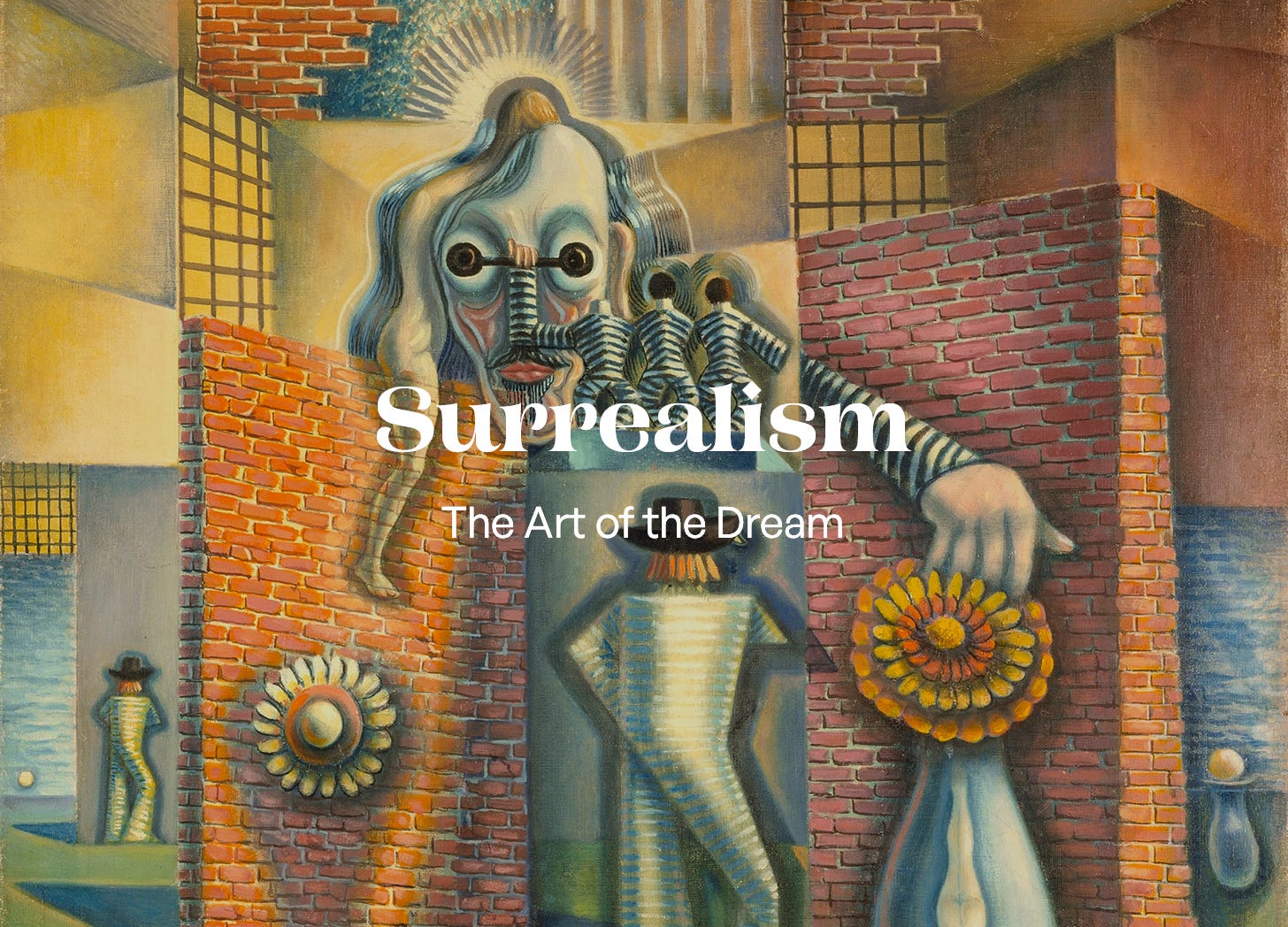
What happens when you close your eyes?
The logical world of straight lines and solid objects dissolves, replaced by a strange landscape of memory, desire, and half-forgotten fears. This mysterious inner world, the vast territory of the unconscious mind, is the country the Surrealists set out to explore. Emerging in Paris in the 1920s, Surrealism was a revolution against reality itself.
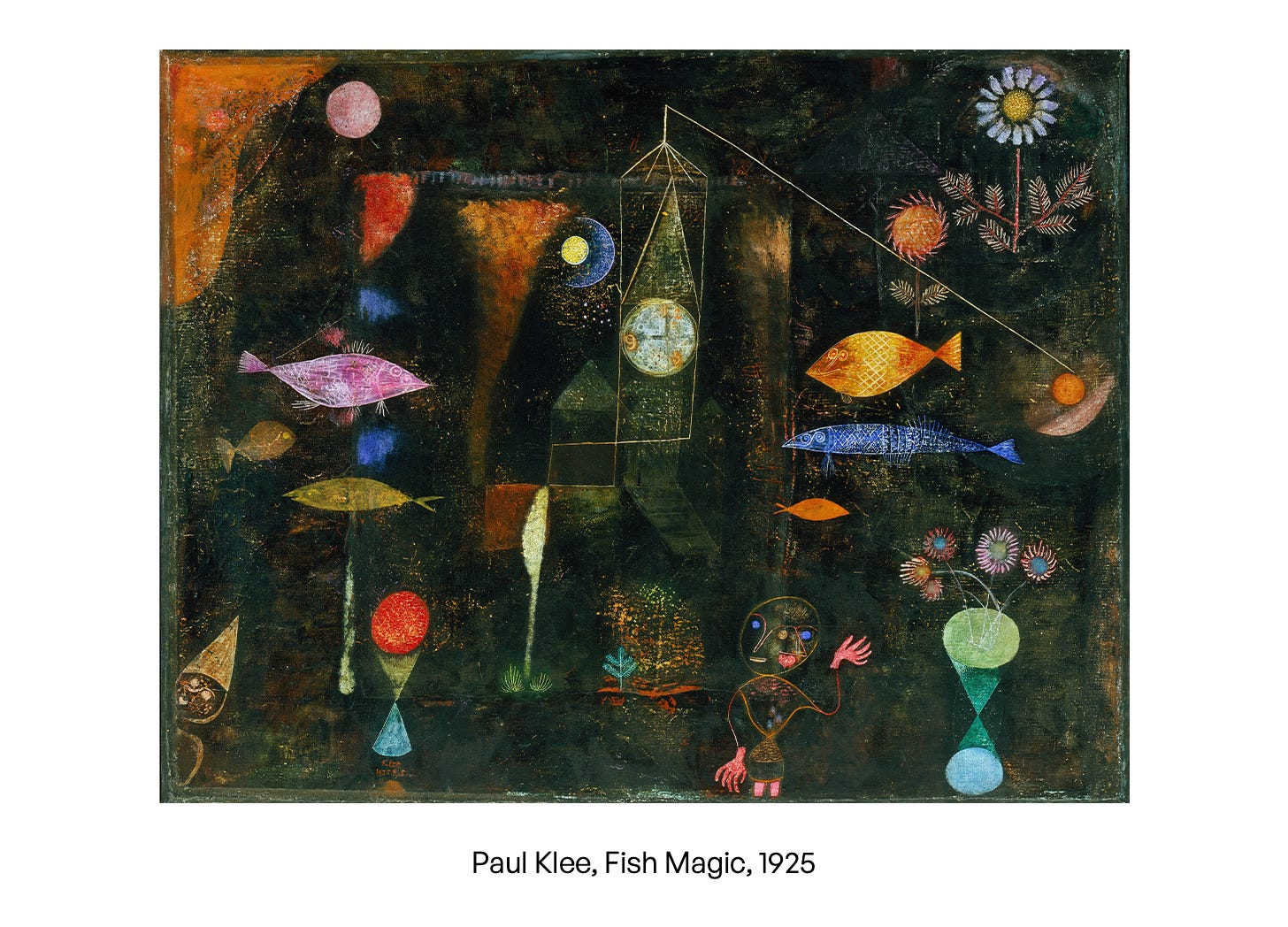
The movement was born from the ashes of Dada. André Breton, a French writer and former Dadaist, grew tired of Dada’s pure, cynical nihilism. He believed that the irrational forces Dada had unleashed shouldn’t just be used to destroy; they could be used to create. He found an unwitting guide in the Viennese psychoanalyst Sigmund Freud, whose theories of the unconscious, dreams, and repressed desires provided the Surrealists with a map to the hidden parts of the human mind.
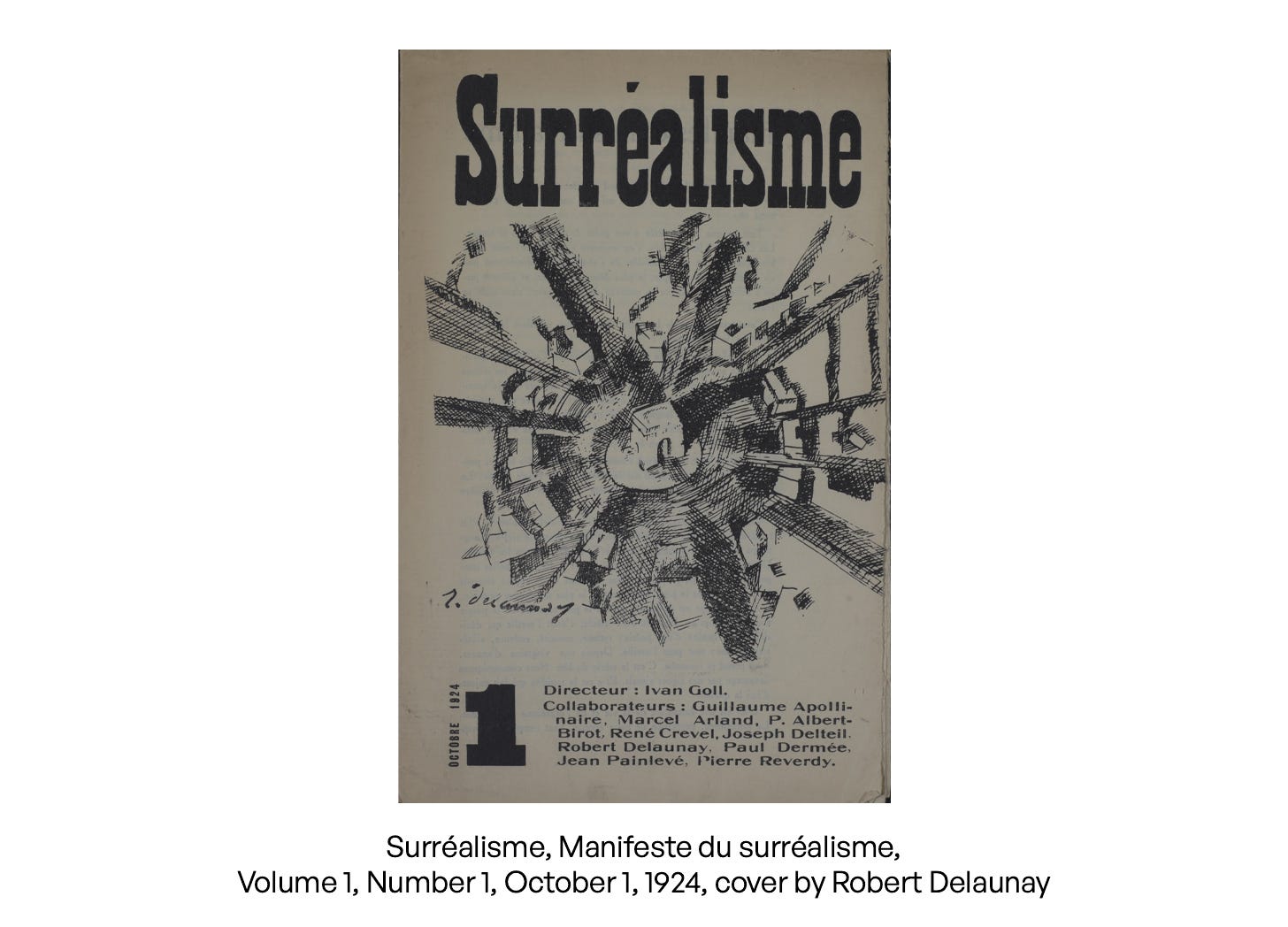
In his 1924 Manifesto of Surrealism, Breton defined the movement as “pure psychic automatism,” a way to tap into the raw, uncensored flow of thought from the subconscious. The goal was to liberate the imagination from the prison of reason, morality, and taste.
The artists who flocked to Breton’s call each found their own way to unlock the unconscious. Salvador Dalí, the movement’s flamboyant showman, painted his paranoid dreams with hyper-realistic, academic precision. He gave us iconic and unsettling landscapes where clocks melt like soft cheese over dead trees, and ants swarm out of a human hand. He made our anxieties look beautiful and strange.
René Magritte, the quiet Belgian philosopher of the group, used a deadpan, illustrative style to play games with logic. He would paint a perfect, realistic image of a pipe and write beneath it, “This is not a pipe” (Ceci n’est pas une pipe). He was right, of course - it’s a painting of a pipe. With this simple gesture, he tears a hole in our perception of reality, forcing us to question the relationship between words, images, and the objects they represent.
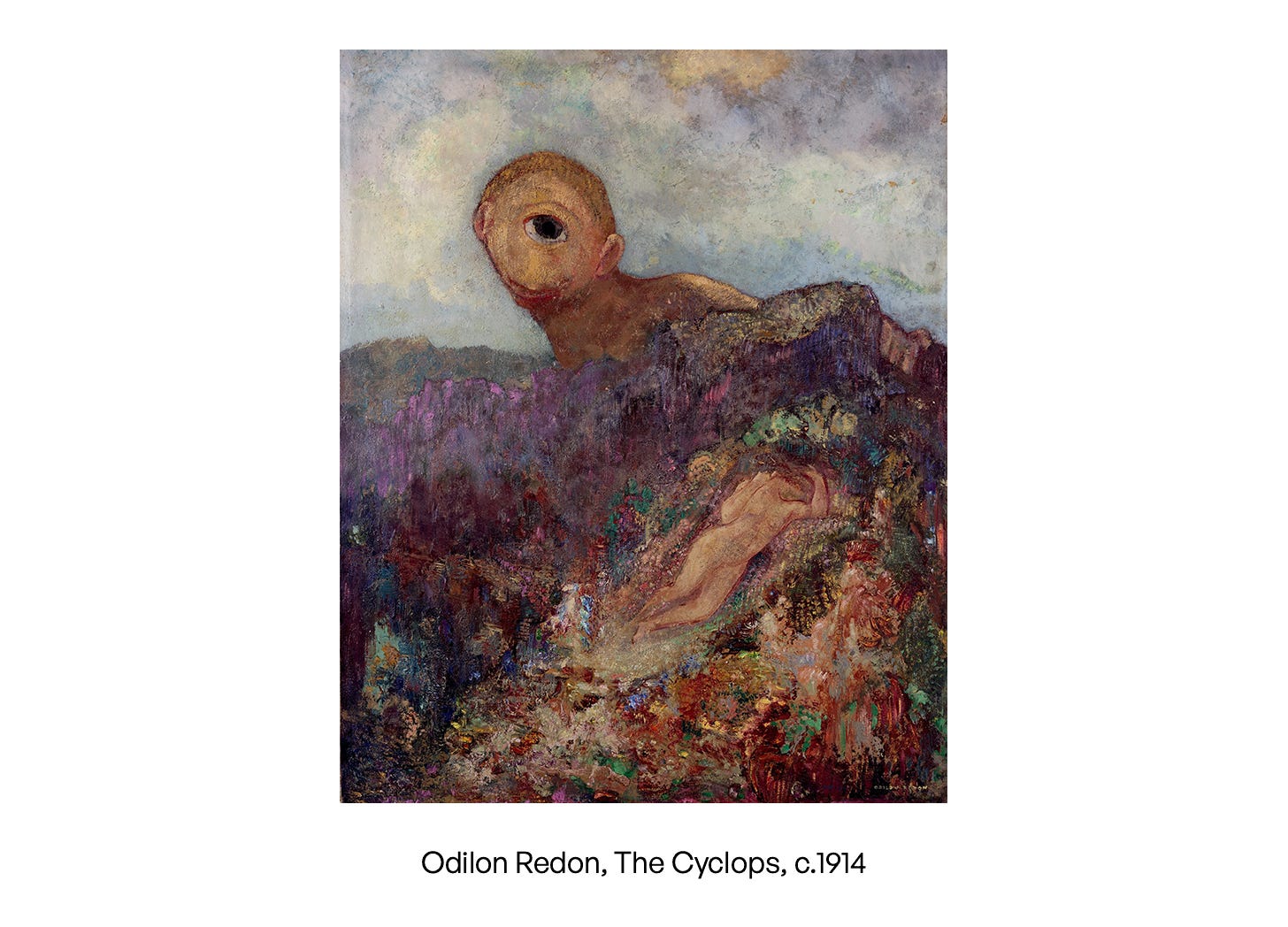
But this fascination with the bizarre, the dreamlike, and the inner eye had a powerful precedent. Decades before the Surrealists, the French Symbolist painter Odilon Redon was already charting these strange territories. He was a master of the uncanny.
Look at his late masterpiece, The Cyclops (c. 1914). A giant, almost shy, one-eyed creature peers over a colorful mountain at the sleeping nymph Galatea. The landscape is lush and vibrant, but the scene is utterly illogical and unnerving. The single, oversized eye is a classic symbol of the inner vision, the subconscious gaze. Redon isn’t illustrating a clear story from mythology; he is painting a feeling - a strange, unsettling mix of tenderness, curiosity, and lurking dread. This is the very essence of a surreal image: a beautifully painted scene that makes no logical sense, but feels emotionally true.
To achieve these dreamlike states, the Surrealists developed special techniques. They practiced automatism, letting their pen or brush move freely across the surface without conscious thought, hoping to channel the subconscious directly. They also mastered the art of unexpected juxtaposition, following the poet Lautréamont’s idea of beauty as “the chance meeting on a dissecting table of a sewing machine and an umbrella.” By placing unrelated objects together, they believed they could create a spark of surprise and reveal hidden connections.
Surrealism’s influence is so immense that we often don’t even notice it. It fundamentally changed film, laying the groundwork for directors like Luis Buñuel and, much later, David Lynch. Its strange logic has been absorbed by advertising and fashion photography. More than any other movement, Surrealism gave us permission to value our inner worlds, to take our dreams seriously, and to find a strange, profound beauty in the irrational.