Post-Impressionism
Beyond the Fleeting Moment

The Impressionists taught the world how to see light. The Post-Impressionists taught the world how to see with the soul.
In the late 19th century, a handful of brilliant, uncompromising artists who had passed through Impressionism decided it wasn’t enough. They admired the Impressionists’ rebellion against academic art, but they felt that the obsession with capturing a fleeting, shimmering moment had left art without structure, emotion, or meaning.
They wanted more. They wanted to go beyond the visible world and into the realm of ideas, emotions, and personal vision. Though they never worked as a unified group, these artists - today known as the Post-Impressionists - became the four great fathers of 20th-century art, each carving a unique path that would lead to the major movements to come.
Art as Structure - Paul Cézanne
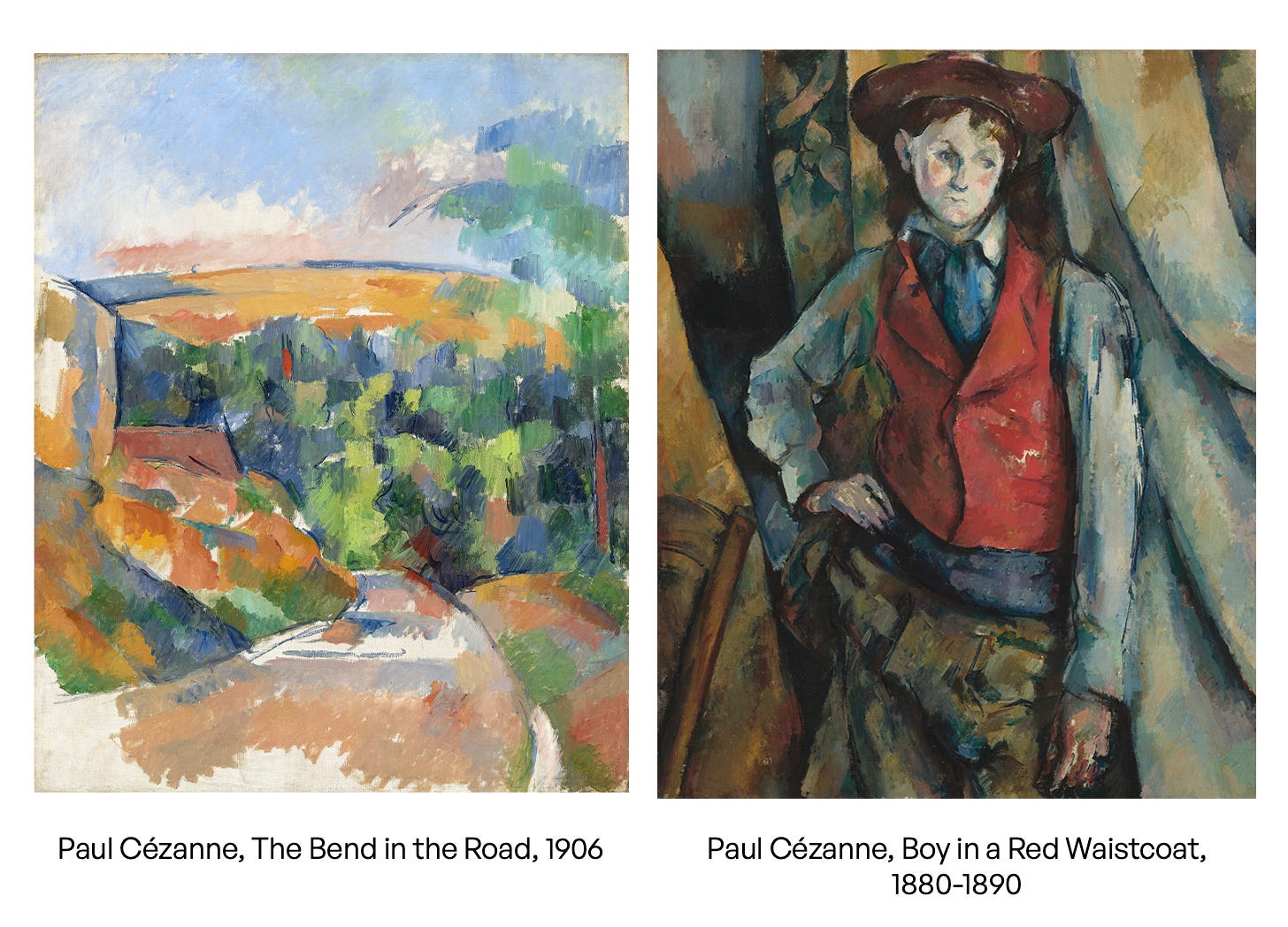
Paul Cézanne was the architect. He looked at the soft, dissolving forms of Impressionism and craved solidity. He believed his job was to find the eternal, geometric structure beneath nature’s fleeting surface. He famously painted the same mountain near his home, Mont Sainte-Victoire, over and over again.
He wasn’t trying to capture the changing light like Monet; he was trying to understand the mountain’s fundamental, almost cubical, form. Building his paintings with methodical, parallel brushstrokes, he treated “nature by the cylinder, the sphere, the cone.” Cézanne wasn’t just painting a landscape; he was building a new, more solid reality on the canvas. This relentless quest for structure would become the bedrock of Cubism.
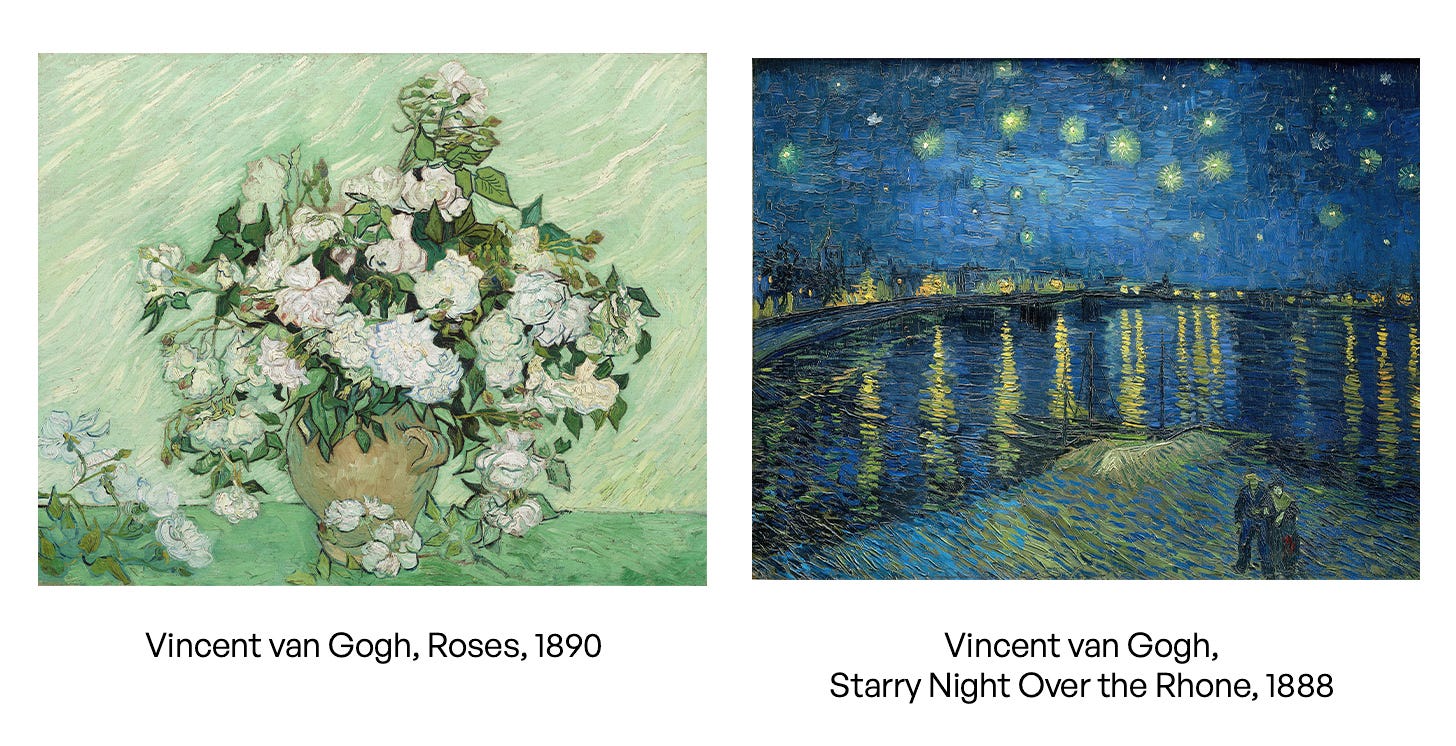
Art as Emotion - Vincent van Gogh
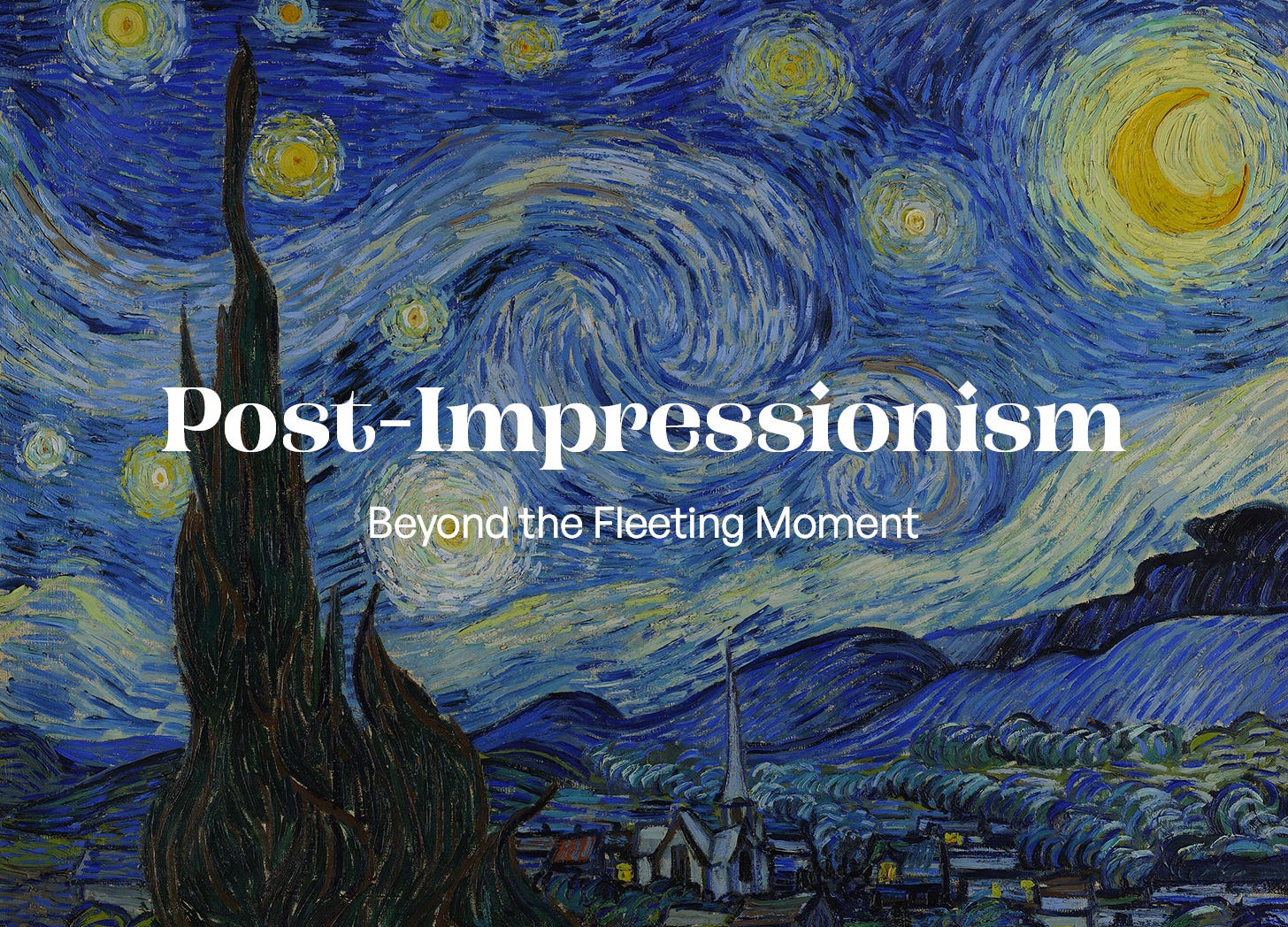
Vincent van Gogh was the tormented visionary. For him, painting was a desperate, raw act of personal expression. He used color and brushwork not to describe what he saw, but to convey the violent intensity of his inner life. Look at his masterpiece, The Starry Night (1889). The sky is not calm; it’s a turbulent, swirling vortex of cosmic energy. A cypress tree writhes like a black flame, connecting the earth to the heavens. Each brushstroke is thick with paint and feeling. This isn’t a picture of the night sky; it is Van Gogh’s soul projected onto the universe. This radical emotional honesty would light the way for the Expressionist movements of the 20th century.
Art as Symbol - Paul Gauguin
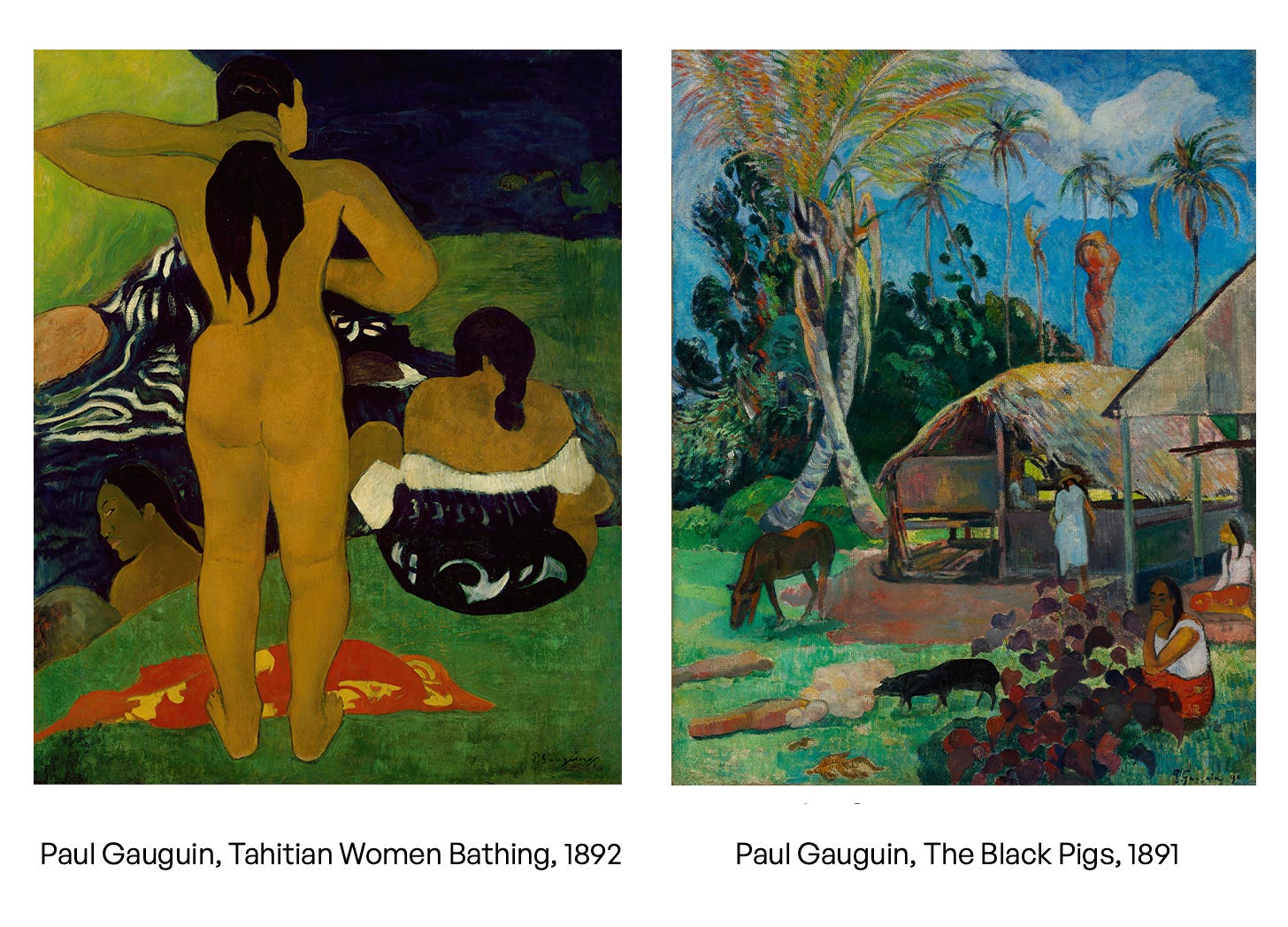
Paul Gauguin was the spiritual seeker. Disgusted with what he saw as the corrupt, materialistic society of Europe, he sought a more “primitive,” authentic life, first in rural Brittany and later in Tahiti. He believed art should come from memory and imagination, not direct observation. In his groundbreaking painting Vision After the Sermon (1888), he depicts a group of peasant women who, after leaving church, are having a collective vision of Jacob wrestling with the angel. Gauguin paints the ground a shocking, flat, unnatural red - not the color of the field, but the color of the spiritual battle happening in their minds. He wasn’t painting reality; he was painting belief. This use of bold, symbolic color would be a profound inspiration for the Fauves.
Art as Science - Georges Seurat
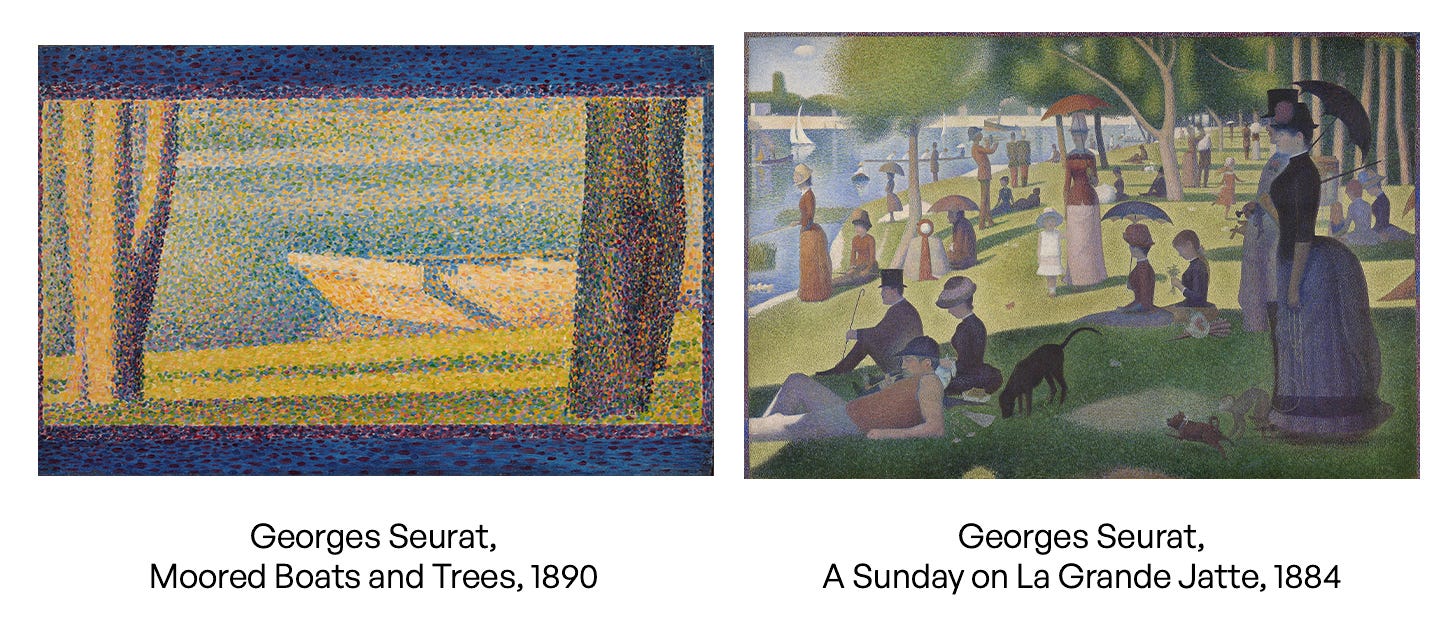
Georges Seurat was the scientist. He looked at the Impressionists’ shimmering light and believed he could perfect it with a rigorous, scientific method. He invented a technique called “Pointillism” (or “Divisionism”), which involved applying tiny, distinct dots of pure color to the canvas. In his monumental work, A Sunday Afternoon on the Island of La Grande Jatte (1884-86), thousands of these dots coalesce in the viewer’s eye to create a scene of luminous, almost frozen, perfection. Where the Impressionists were spontaneous, Seurat was meticulous. He was an artist as an optical physicist, creating a new kind of formal order that would influence many later abstract painters.