
Learning to stay
The art of being present.

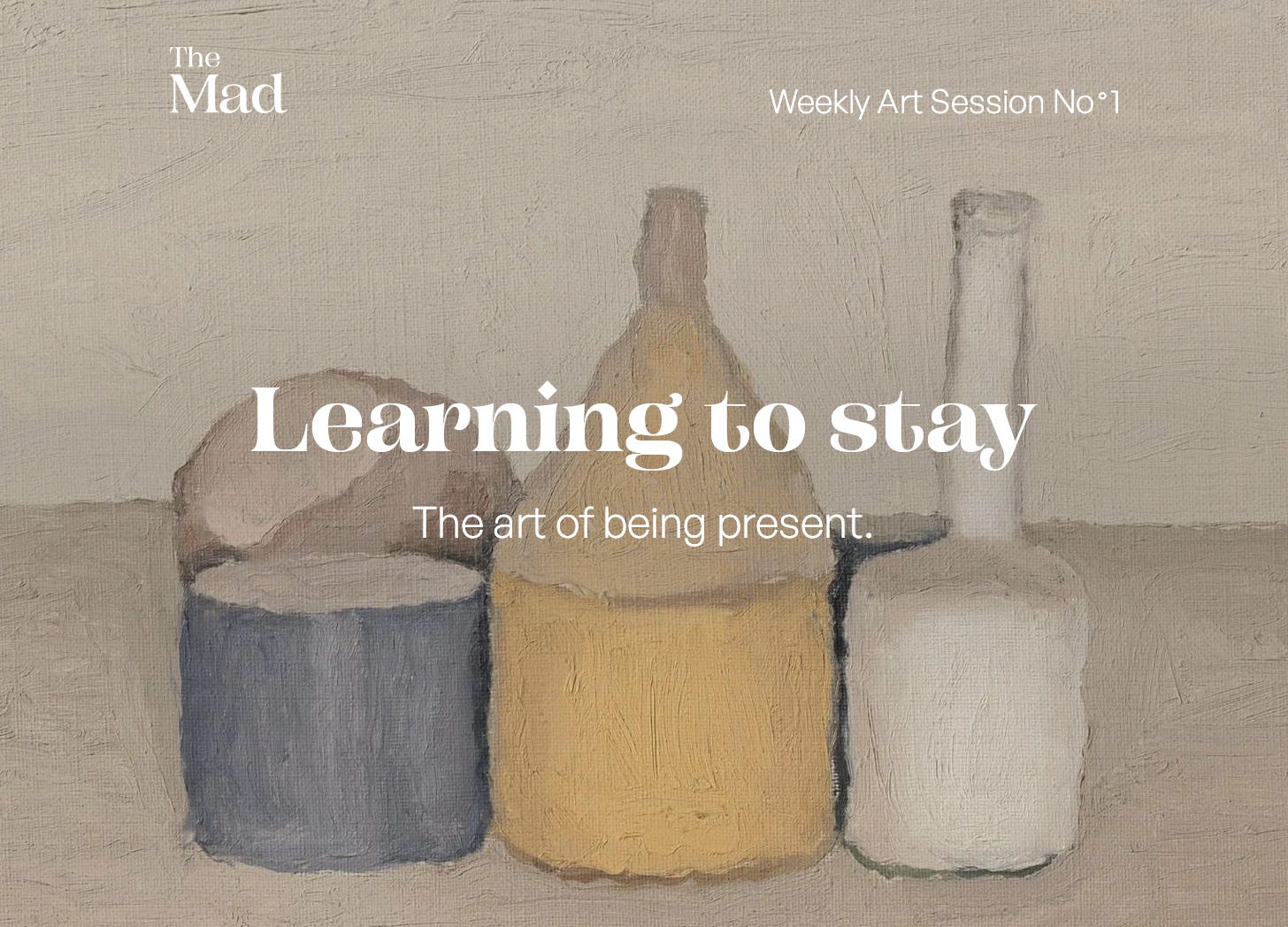
There are paintings that want your reaction.
They arrive loudly, armed with color, movement, drama - they ask to be liked or rejected immediately. You stand in front of them for a moment, feel something sharp and fast, and move on. They fit neatly into the rhythm we already live by.
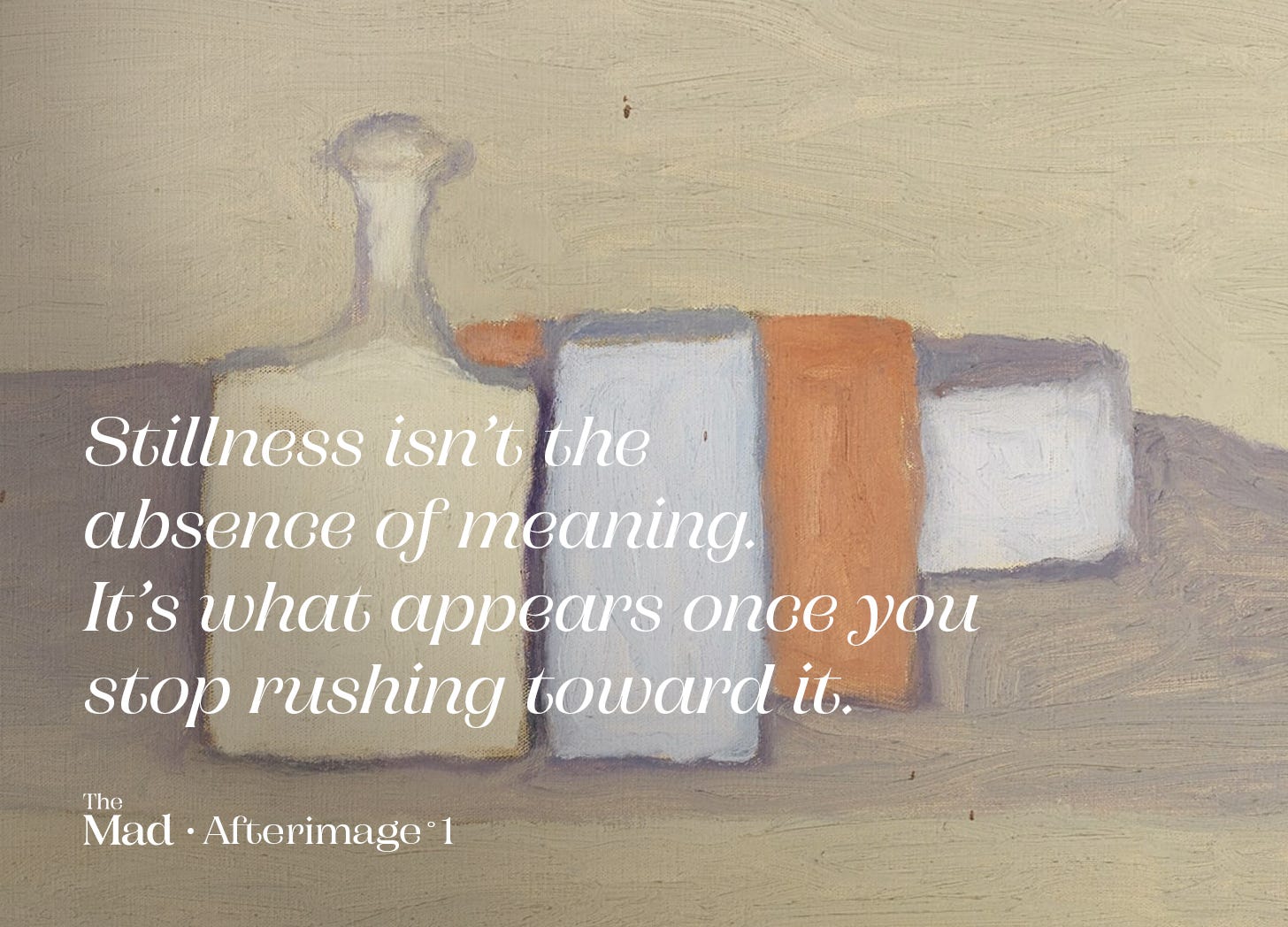
And then there are paintings like this one by Giorgio Morandi.
Paintings that don’t reward urgency.
Paintings that don’t open themselves on demand.
Paintings that seem almost indifferent to whether you’re impressed.
At first glance, this feels like very little. A handful of bottles. Muted colors. No story, no action, no obvious emotional hook. The kind of image you might glance at in a book and flip past without guilt.
Which is precisely why it matters.
We’ve trained ourselves - quietly, efficiently - to expect immediacy from everything. Meaning on first contact. Emotion on arrival. We rush through music until a chorus appears. We skim articles for sentences that justify our attention. We watch films while checking our phones, half-present, half-extracting.
Even rest has become something we optimize.
We don’t notice how often we leave before anything has had the chance to unfold.
This painting exposes that habit.
Nothing here reaches out to you. Nothing asks for approval. Nothing tries to seduce your attention.
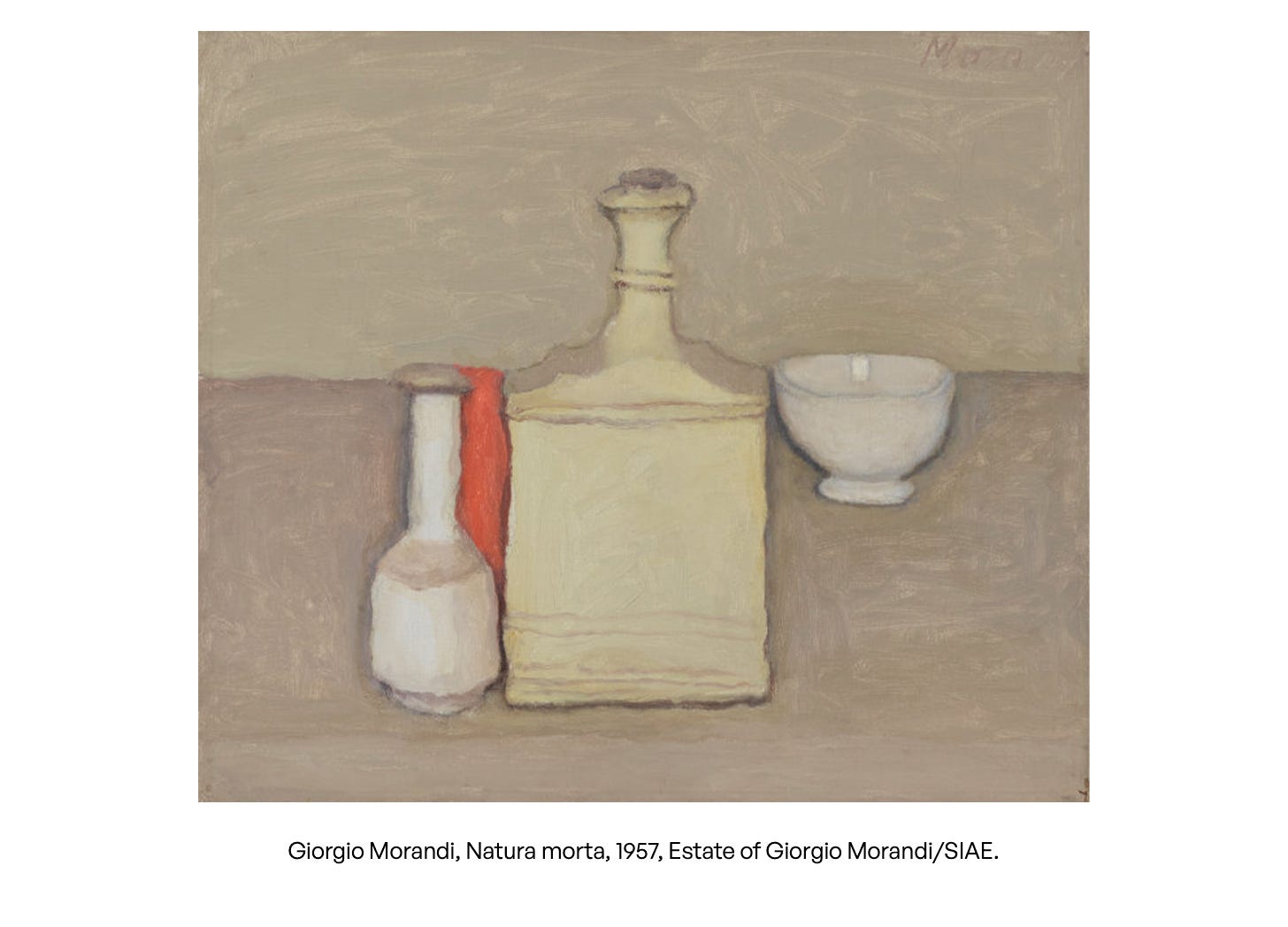
The objects are close, but not intimate. The colors hover within a narrow range, refusing contrast. The space feels compressed, as if the room has exhaled and decided not to inhale again. Every element seems to hold itself back by a fraction.
And yet, the longer you stay, the more deliberate everything becomes.
These bottles are not casually arranged. They lean, but never collapse. They almost touch, but don’t. Each shape seems aware of the others without interacting. There is a tension here, but it’s quiet - the kind of tension that exists when movement is possible but postponed.
Morandi painted variations of this same subject again and again, across decades. The same forms. The same limited palette. The same refusal to escalate.
This wasn’t a lack of imagination.
It was discipline.
And discipline is uncomfortable to look at in a culture obsessed with acceleration.
We like to believe that if something is important, it will announce itself. That if a work matters, it will meet us halfway, explain itself, reward us quickly. When it doesn’t, we assume the failure is on the artwork’s side.
But sometimes the failure is ours.
We leave too early.
Think about how often this happens outside of art.
We rush conversations, waiting for our turn to speak instead of listening long enough for something real to surface. We abandon ideas the moment they don’t resolve themselves into clarity. We skim feelings, naming them prematurely just to move past them.
Even boredom has become something we avoid rather than sit inside.
This painting asks a different kind of question:
What happens if you don’t move on?
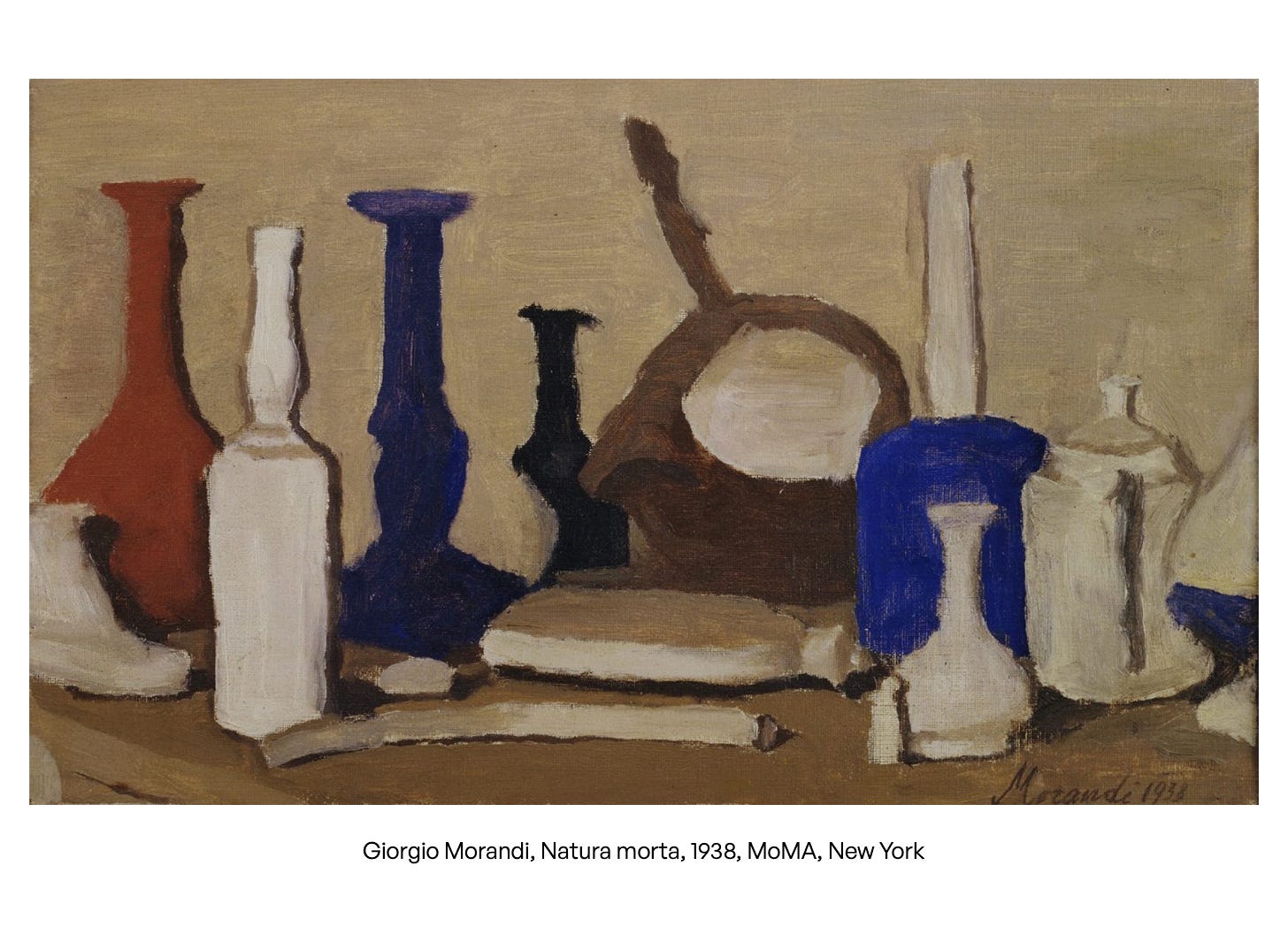
The story here is not visual in the traditional sense. There’s no event to follow. No before and after. The narrative is internal, built out of restraint. The longer you look, the more the painting reveals itself as a decision - a decision to stay within limits, to resist drama, to let nuance do the work.
Stillness, here, isn’t passive. It’s active restraint.
And that’s where the shift begins.
What initially felt empty starts to feel concentrated. The silence thickens. The space between objects begins to matter as much as the objects themselves. You start noticing how little it takes for an image to hold weight when nothing is wasted.
At some point, often later than we expect, something settles.
Not excitement. Not revelation. Recognition.
You realize that the painting hasn’t changed.
Your pace has.
This is the first thing this practice asks of you: not interpretation, not knowledge, not explanation - but patience. The willingness to stay with something long enough for it to meet you on its own terms.
Before stories appear in paintings, before meanings connect, before patterns emerge across works and artists, there is this quieter skill: resisting the urge to leave at the first moment of uncertainty.
Modern life trains us to escape that moment.
Art, at its best, asks us to remain inside it.
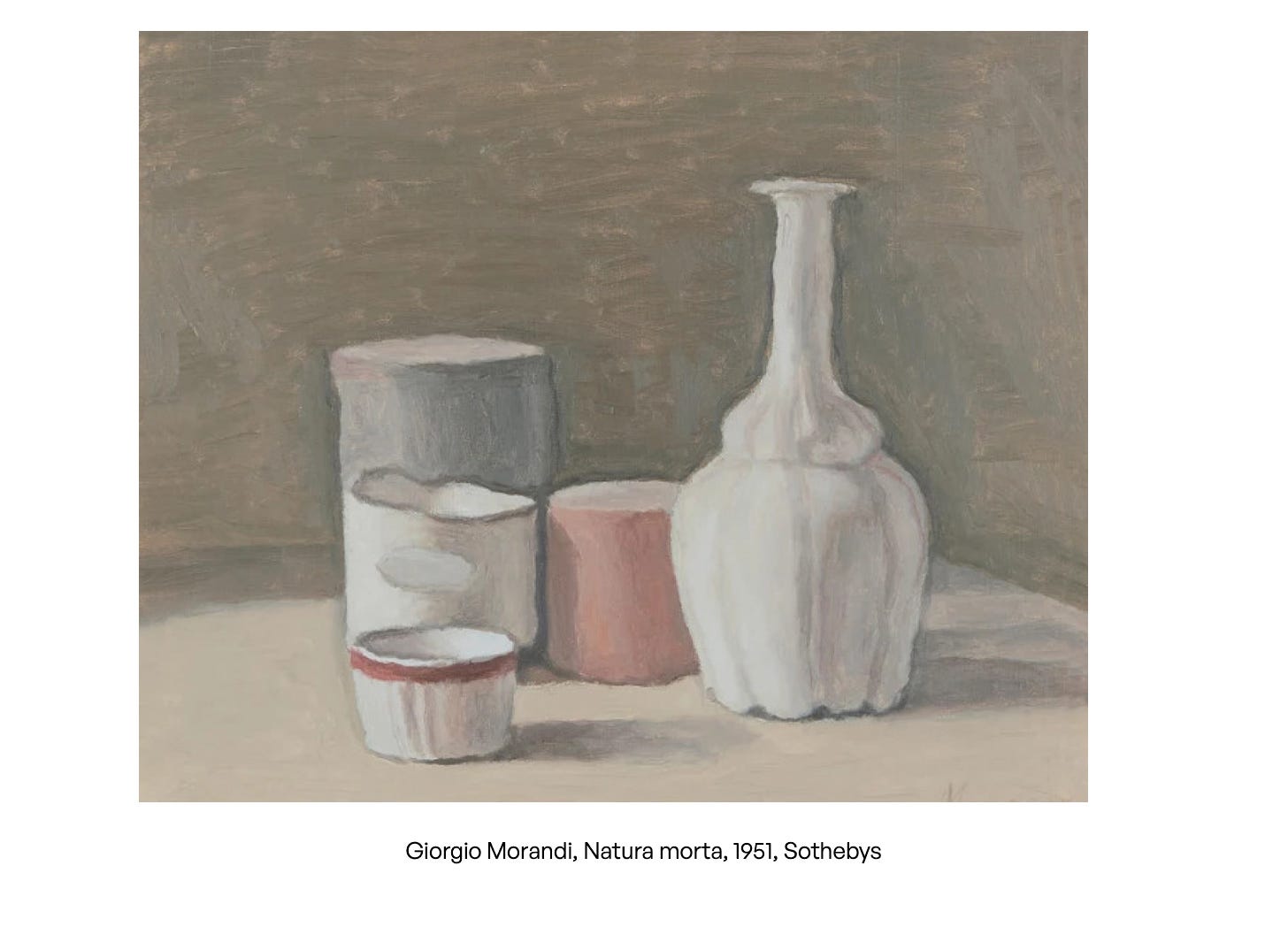
Morandi understood this. That meaning doesn’t need to shout. That repetition can deepen rather than dull. That attention, sustained long enough, becomes a form of respect.
This painting doesn’t give you a story right away.
It waits to see whether you’re willing to stay.
i genuinely enjoyed reading this and gained a new perspective of life. very beautiful words
Loved it. Every line. Thank you so much 🕊️