
Fauvism
The Wild Beasts of Color

Imagine walking into a respectable art exhibition in Paris in 1905.
You pass rooms of tasteful sculptures and serene landscapes. Then, you step into a gallery and are assaulted by a riot of color. Canvases roar with reds, blues, and greens so intense they seem to leap off the wall.
Portraits are painted with streaks of yellow and purple. A tree could be orange, a river could be pink.
A shocked critic, surveying the scene, noticed a single, classical Renaissance-style sculpture standing in the middle of the room. He famously wrote of “Donatello among the wild beasts” (fauves in French). The name was meant as an insult, but the artists in a similar fashion as the impressionists - a group of friends led by Henri Matisse and André Derain - wore it as a badge of honor. They were the Fauves, and their goal was simple and revolutionary: to liberate color from its duty to describe reality.
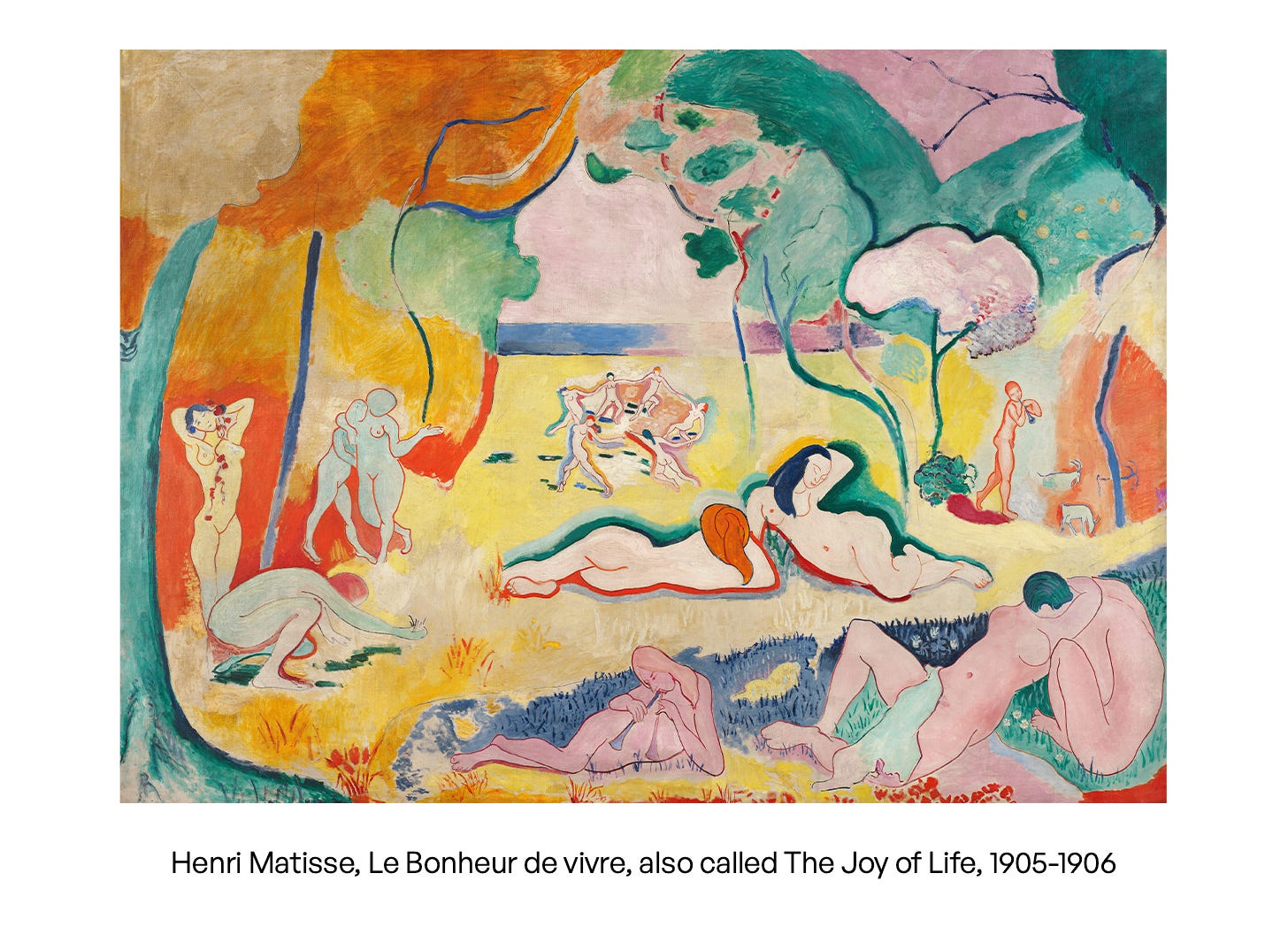
For centuries, color had a job: a sky was blue, grass was green, a lemon was yellow. The Fauves declared that color was officially unemployed from that job. Its new role was to express the artist’s inner feelings.
They squeezed paint directly from the tube onto the canvas, using bold, unblended pigments to convey emotion, joy, and sensation.
The painting that drew the most fire at that 1905 exhibition was Henri Matisse’s portrait of his wife, Woman with a Hat. It is a whirlwind of “incorrect” colors. A shocking streak of green slices down her nose, patches of orange and blue dapple her cheeks, and her elaborate hat is an explosion of pure, clashing pigments. Critics called it madness. But Matisse wasn’t trying to capture a perfect likeness; he was painting the sensation of looking at his wife, using color to build a new kind of emotional harmony. It was a declaration of independence for color.
