Expressionism
The Shape of Feeling

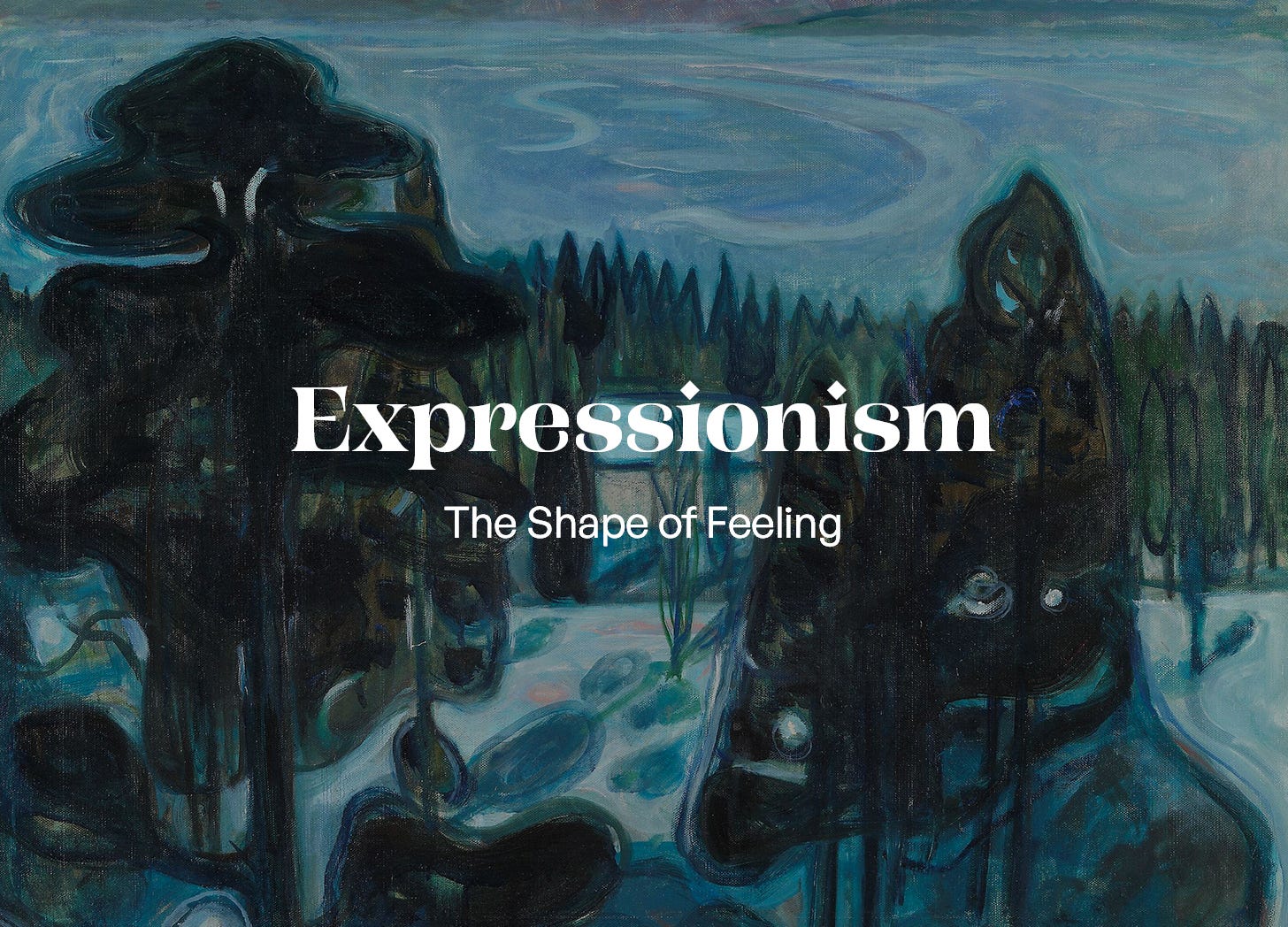
What does anxiety look like?
What is the color of loneliness or the shape of joy? For a group of artists in early 20th-century Germany and Austria, these were the only questions that mattered. They were the Expressionists, and they believed that art’s purpose was not to show the world as it appeared to the eye, but as it was felt on the inside.
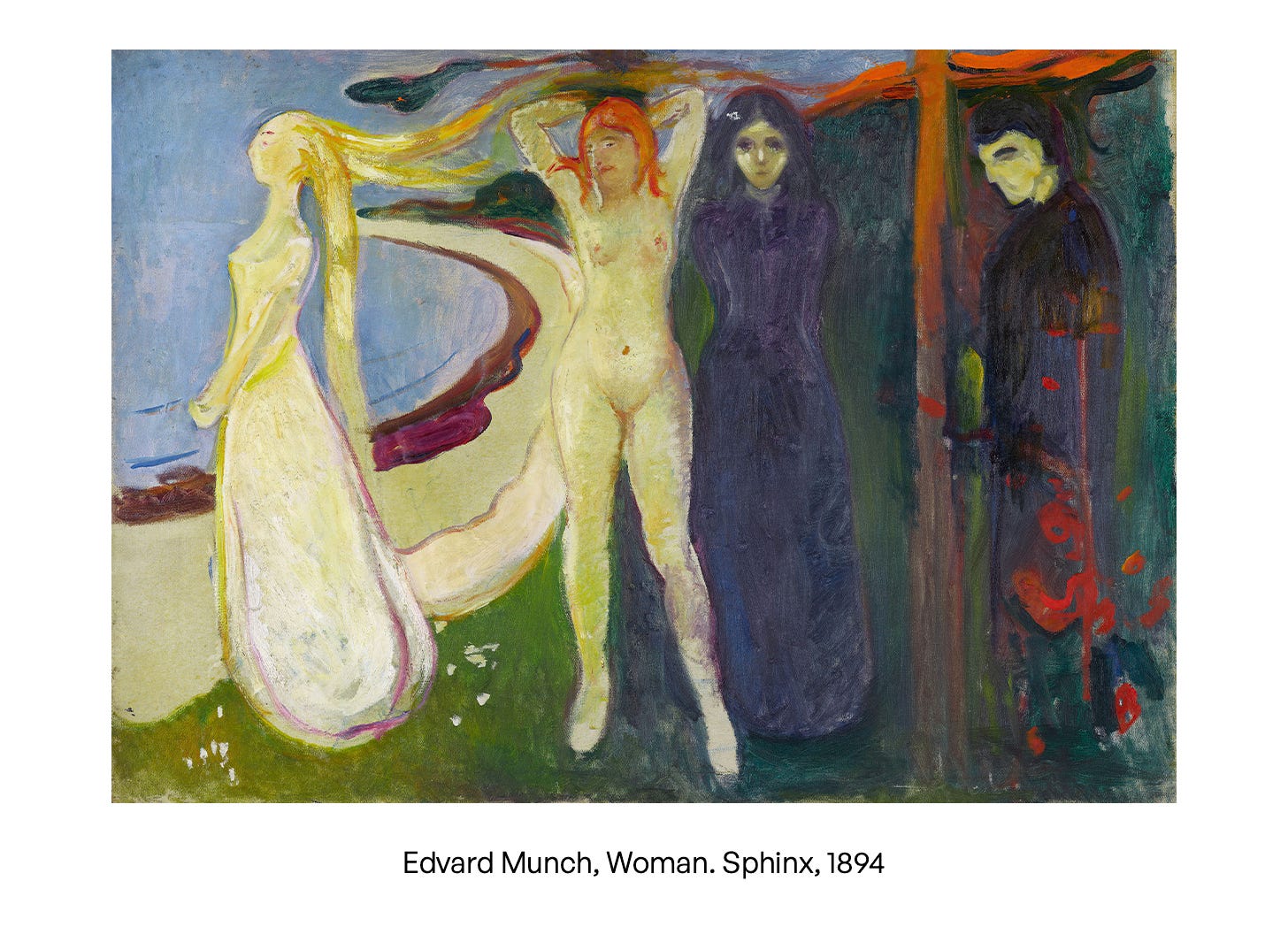
In a time of jarring industrial change and looming war, they turned inward, creating a raw, emotional, and often disturbing art that was a collective scream against the modern world.
The movement’s patron saints were artists who had already dared to paint their inner turmoil.
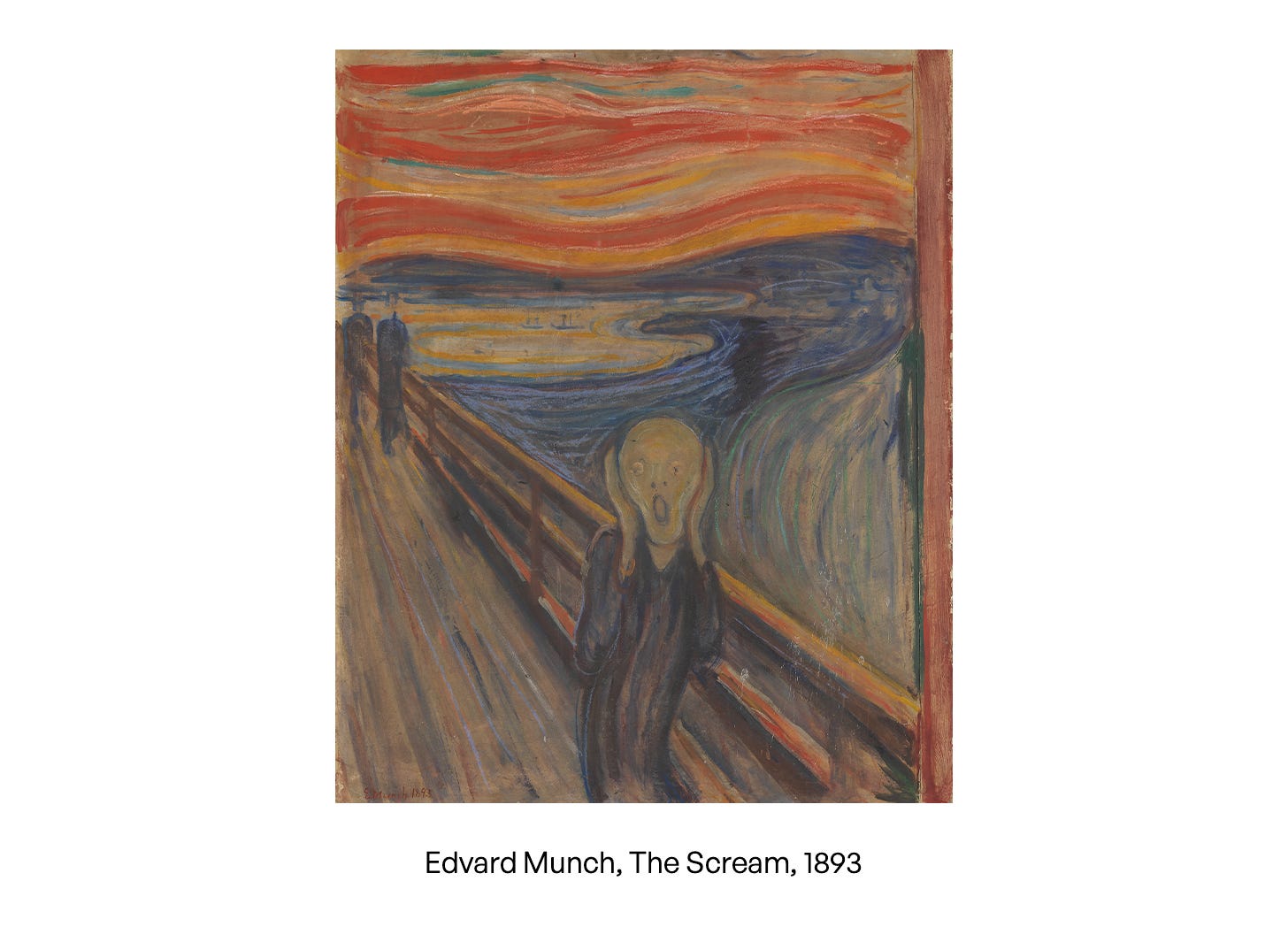
Edvard Munch’s iconic painting, The Scream (1893), had proven that color and form could be used to convey powerful psychological states.
Munch’s distorted figure, hands clapped to its head against a blood-red sky, is not a portrait of a person; it is a portrait of pure, existential dread. This was the foundation the Expressionists built upon.
The movement crystalized into two main groups, each with a distinct vision.
In the bustling, chaotic cities of Dresden and Berlin, a group of young architecture students formed Die Brücke (The Bridge) in 1905. They wanted their art to be a bridge to a more authentic, primal future. Led by artists like Ernst Ludwig Kirchner, their work captured the nervous energy and alienation of modern urban life.
Look at Kirchner’s powerful painting, Portrait of a Woman (1911). The image is intense and psychologically charged. The sitter’s form is defined by sharp, jagged lines, and her face is a stark, confrontational mask. The colors are acidic and dissonant - vibrant yellows, oranges, and greens clash deliberately, radiating a nervous energy. This is not a flattering, realistic depiction; it’s a portrait of an inner state, using distorted form and emotional color to expose the perceived tension and psychological complexity of the modern individual.
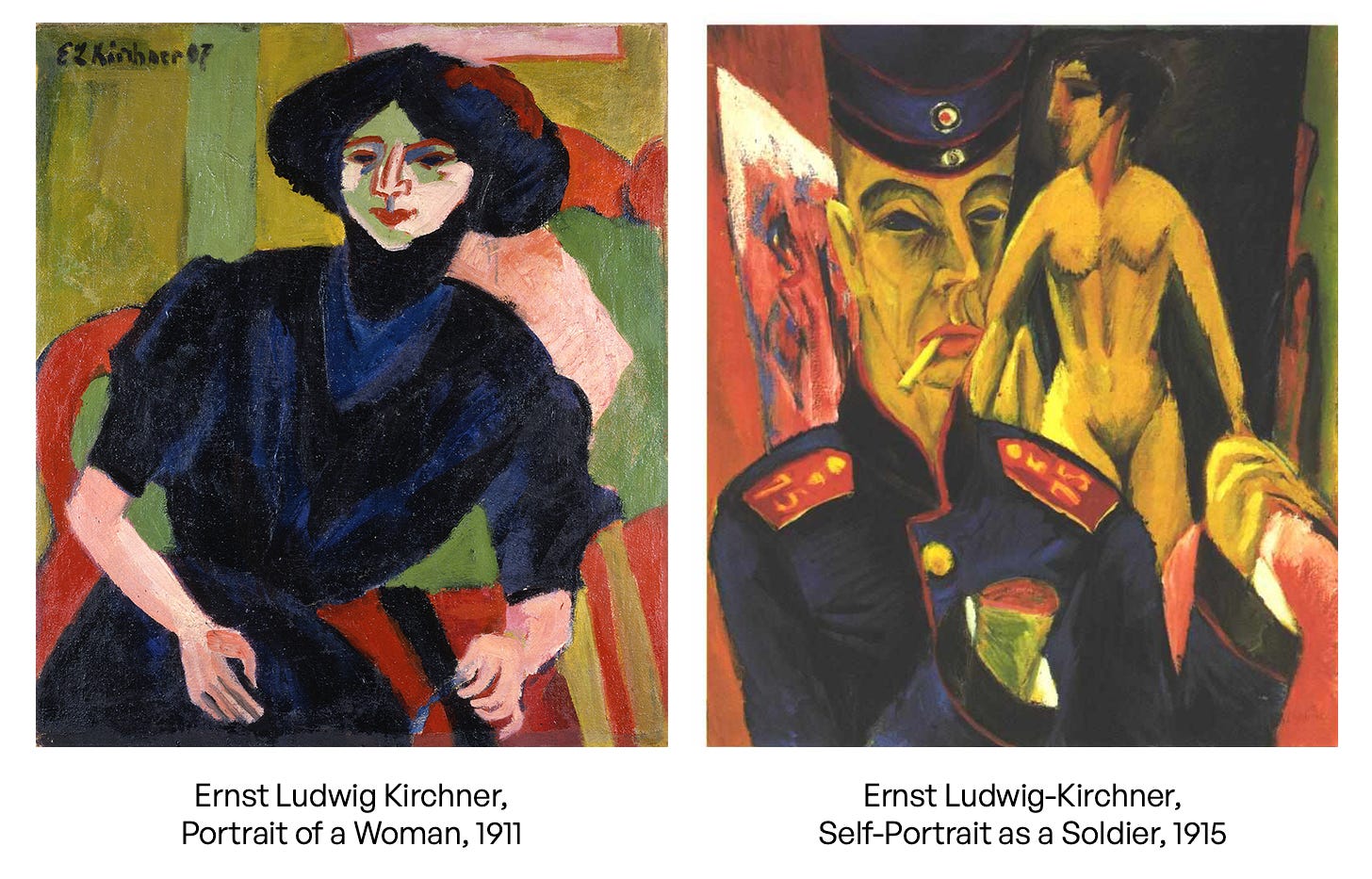
Later, after a mental breakdown triggered by his brief service in World War I, Kirchner painted his devastating Self-Portrait as a Soldier (1915). He depicts himself in uniform, with a haunted, hollow look in his eyes and, most shockingly, a bloody, amputated right hand - the hand of the painter. It was a symbolic wound, representing his trauma and his fear that he could no longer create. It is one of the most powerful anti-war statements ever painted.
In contrast to the urban grit of Die Brücke, the artists of Der Blaue Reiter (The Blue Rider) in Munich sought a spiritual escape from the modern world. Led by Wassily Kandinsky and Franz Marc, they turned to nature and abstraction to find a higher, universal truth.
Franz Marc believed that animals were purer beings than humans, living in harmony with the universe. In his famous painting Blue Horse I (1911), the animal is rendered in a bold, vibrant blue.
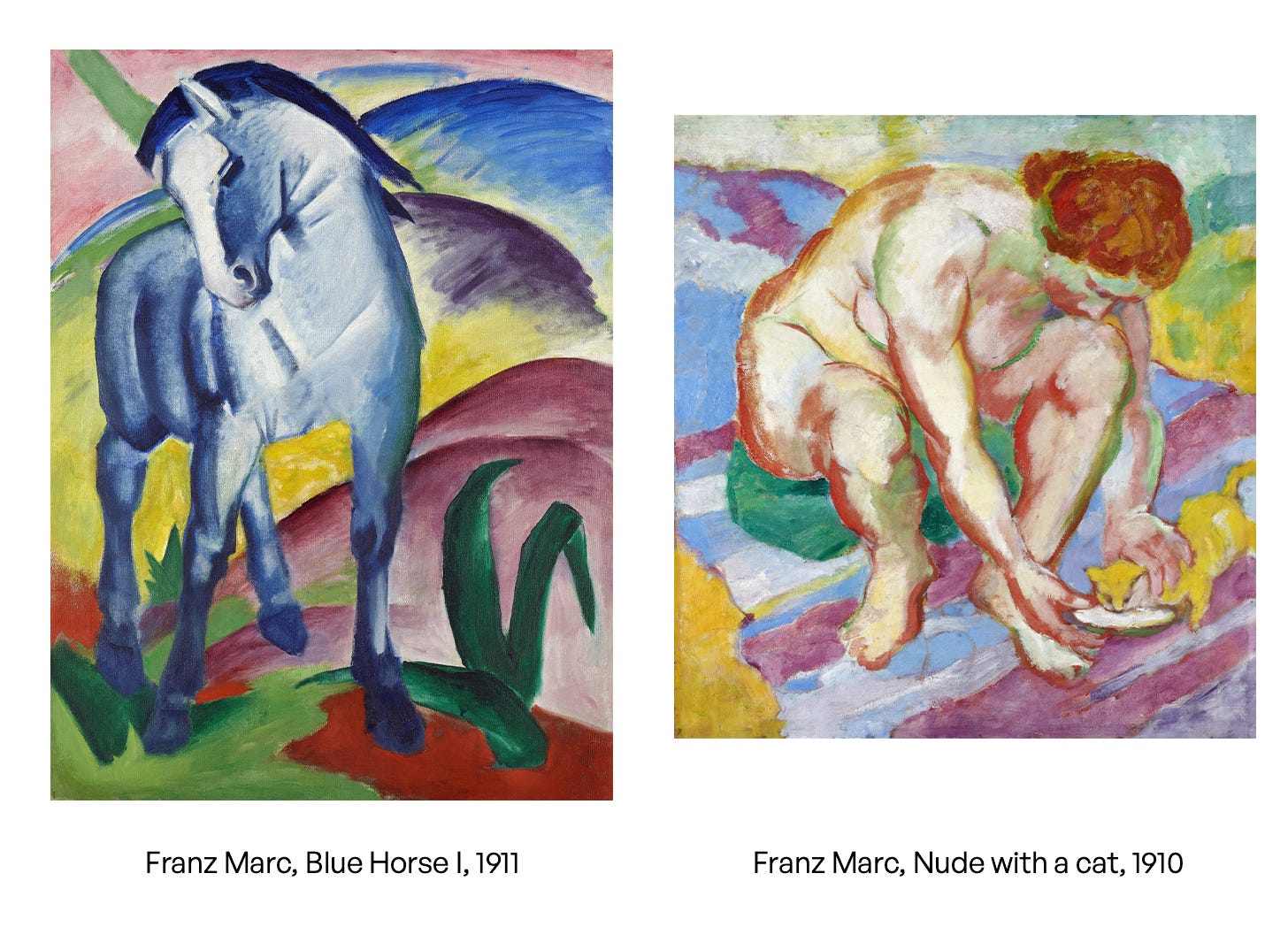
The horse isn’t blue because Marc saw a blue horse; it’s blue because, in his personal color theory, blue represented the masculine and the spiritual.
The painting is an icon of gentle strength and harmony with nature - a peaceful, spiritual world away from Kirchner’s urban nightmare.
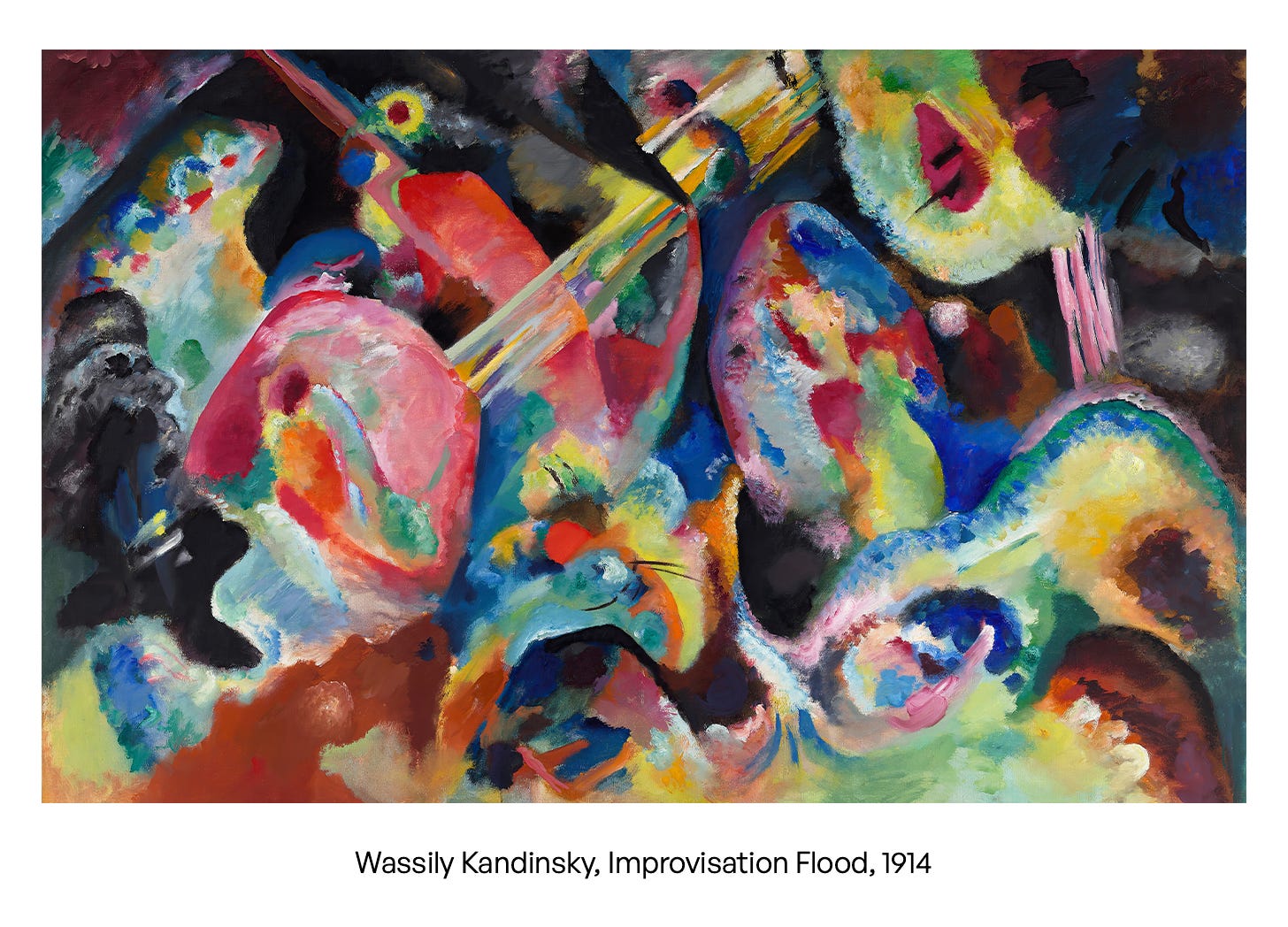
This search for a spiritual art found its ultimate expression in the work of his friend, Kandinsky, who abandoned representation altogether to create pure symphonies of color and form.
Expressionism’s legacy is immense. It forged a powerful new language for emotion, proving that art could be a direct conduit for the human soul. Its influence would ripple through the century, re-emerging most forcefully in the United States after World War II with the rise of Abstract Expressionism. It reminded the world that sometimes, the truest reality is the one we feel inside.