Cubism
Shattering the Mirror, the Cubist Revolution

For 500 years, a painting was like a window onto the world - a single, perfect viewpoint showing a single, frozen moment in time.
Then, in the early 20th century, two young artists in Paris decided to shatter that window. Their names were Pablo Picasso and Georges Braque, and the revolution they started was Cubism.
They began with a problem. If you walk around a person or an object, you see them from countless angles - the front, the side, the back, all at once in your memory. Why should a painting be limited to just one? In an age when photography could capture a “perfect” image in an instant, these artists felt painting needed a new job. Its job was not to copy reality, but to present a truer, more complete experience of it.
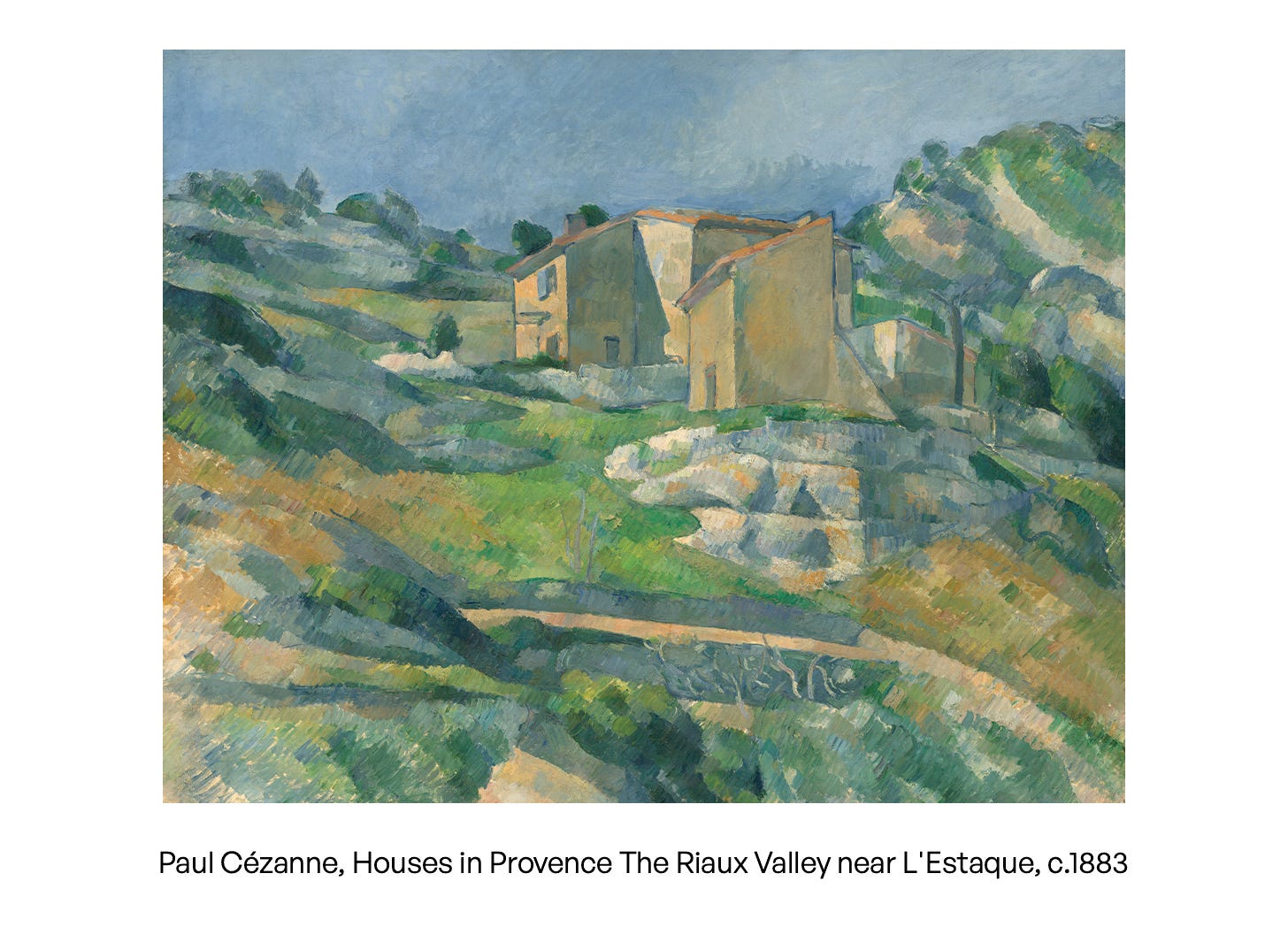
Their spiritual guide was the post-impressionist master Paul Cézanne, who had famously advised artists to “treat nature by the cylinder, the sphere, the cone.” He was the first to suggest that an artist should paint not just the surface of things, but their underlying geometric structure. Picasso would later say, “Cézanne was my one and only master.”