Abstract Art
A Language for the Soul

What if a painting wasn’t a picture of something, but the thing itself?
This single, radical question is the engine behind abstract art. For centuries, art’s primary job was to imitate the world. But as the 20th century dawned, a new generation of artists felt an urgent need to escape.
They weren’t just escaping tradition; they were escaping the literal, the obvious, and the material.
They sought a universal language of color, form, and line that could express what couldn’t be seen: emotions, spiritual truths, and the very rhythm of modern life.
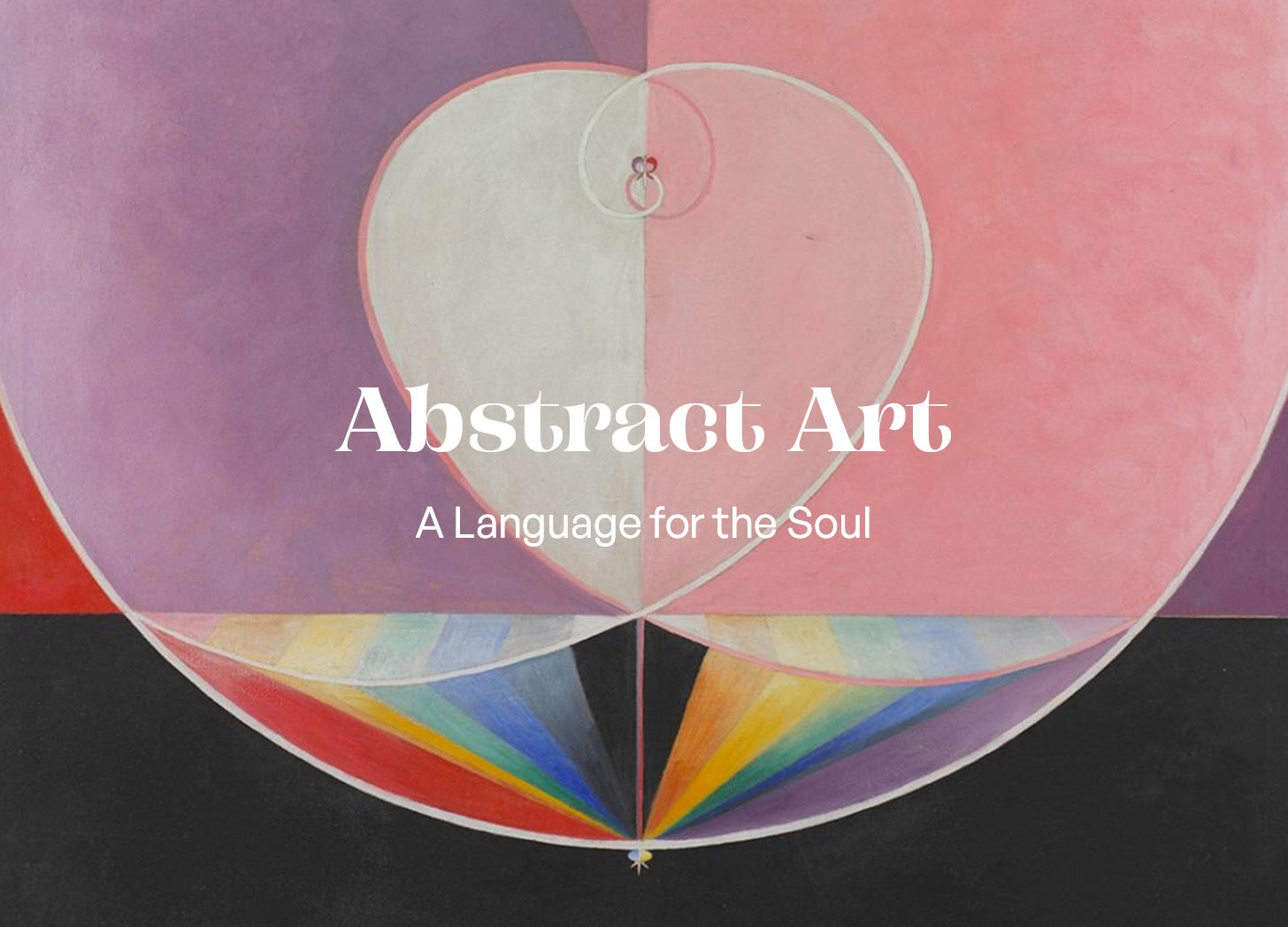
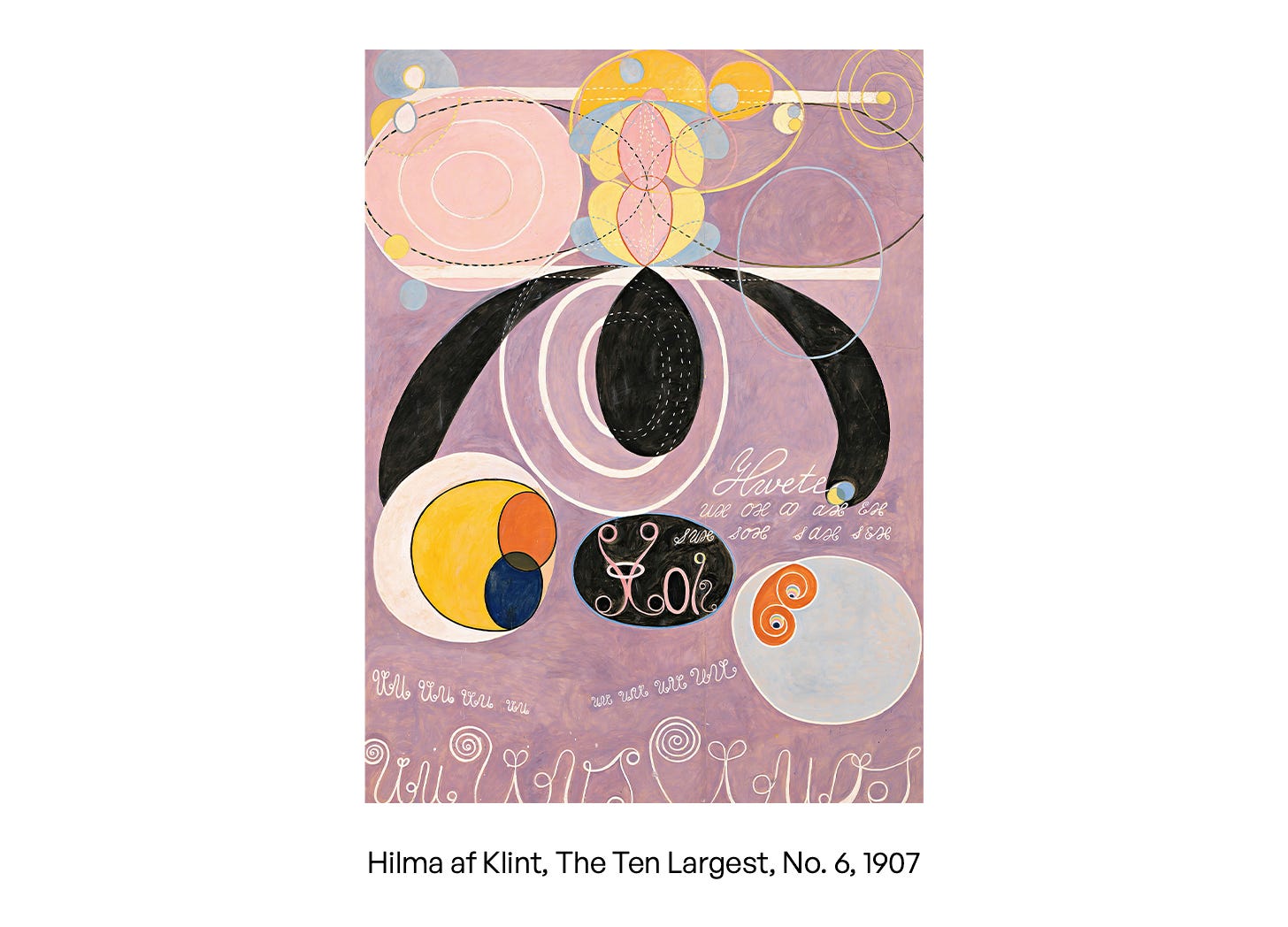
The story of abstraction has a secret prequel. Decades before the men who would become famous for it, the Swedish mystic Hilma af Klint was already creating monumental, vibrant abstract works. Guided by spiritual visions, she painted series like The Ten Largest (1907), works not intended for galleries but meant to serve as sacred diagrams of a higher consciousness. Her pioneering work, hidden from the public for years, proves that the desire for abstraction was a spiritual necessity waiting to be discovered.
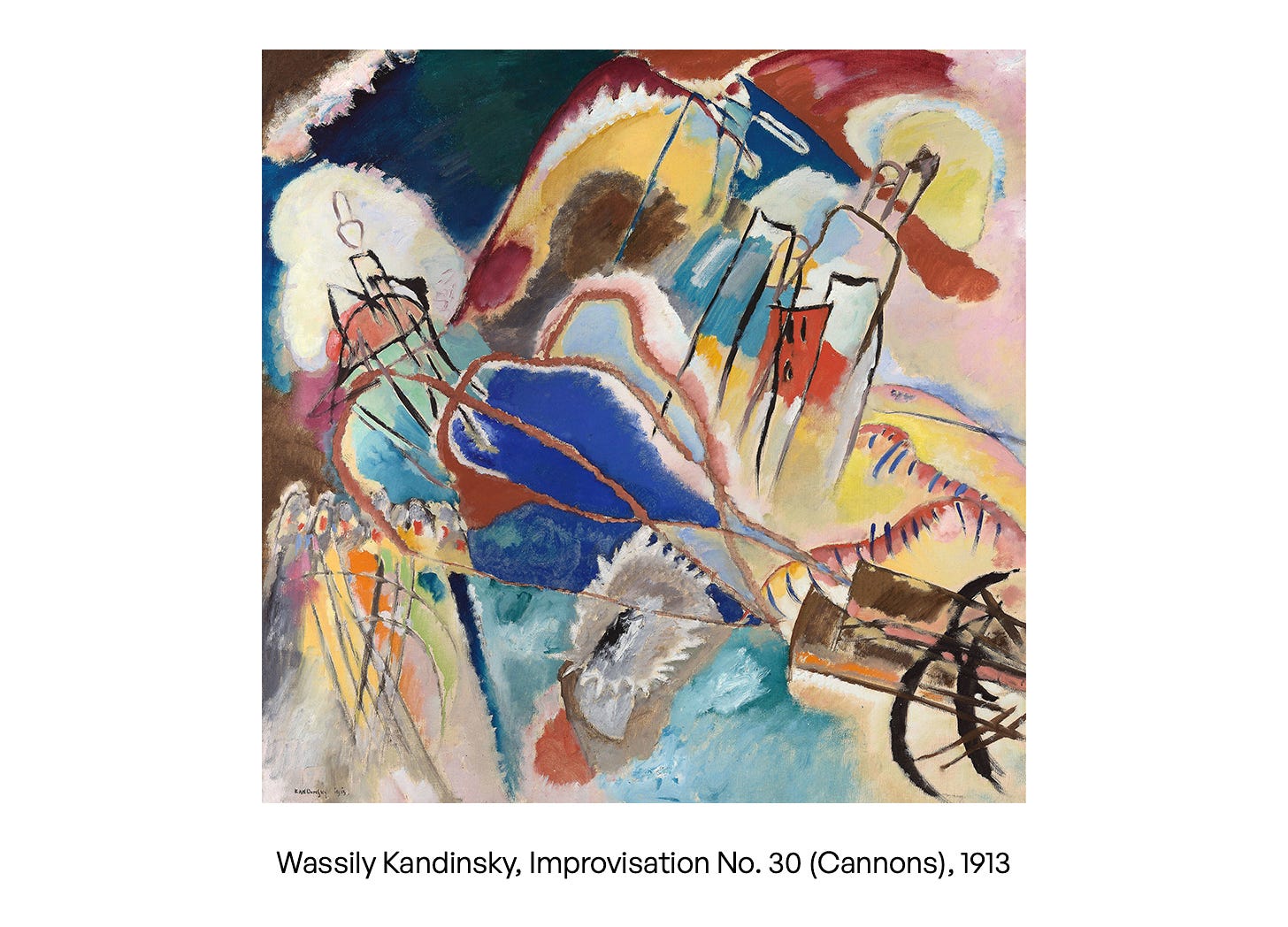
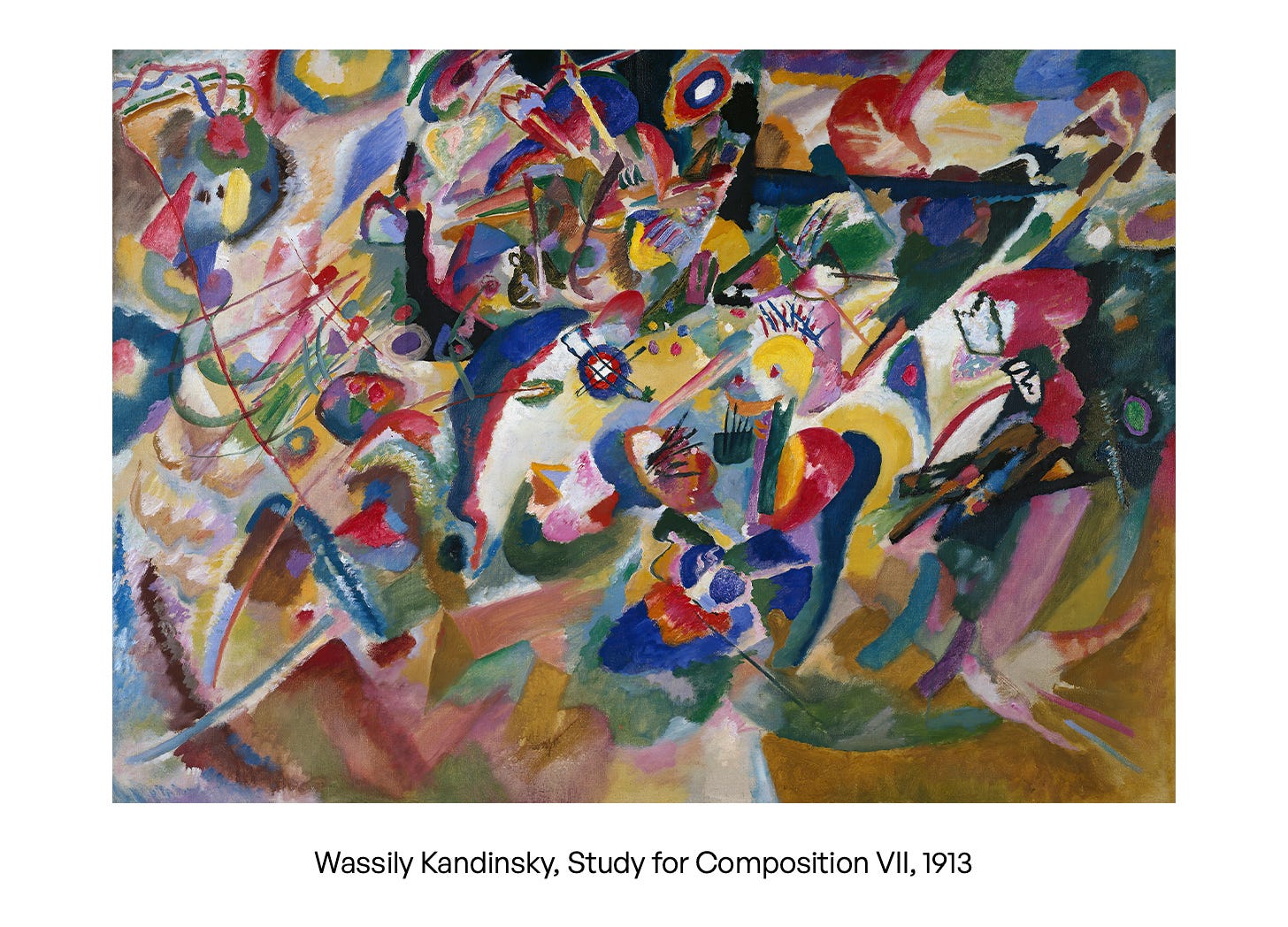
It was artists like Wassily Kandinsky who brought this necessity into the mainstream. He famously declared that art should affect the soul in the same way music does. Look at his study for one of his masterpieces, Composition VII (1913). It’s not a picture of a storm; it is a storm - a swirling, symphonic explosion of color and energy that bypasses the rational mind and strikes on a purely emotional level.
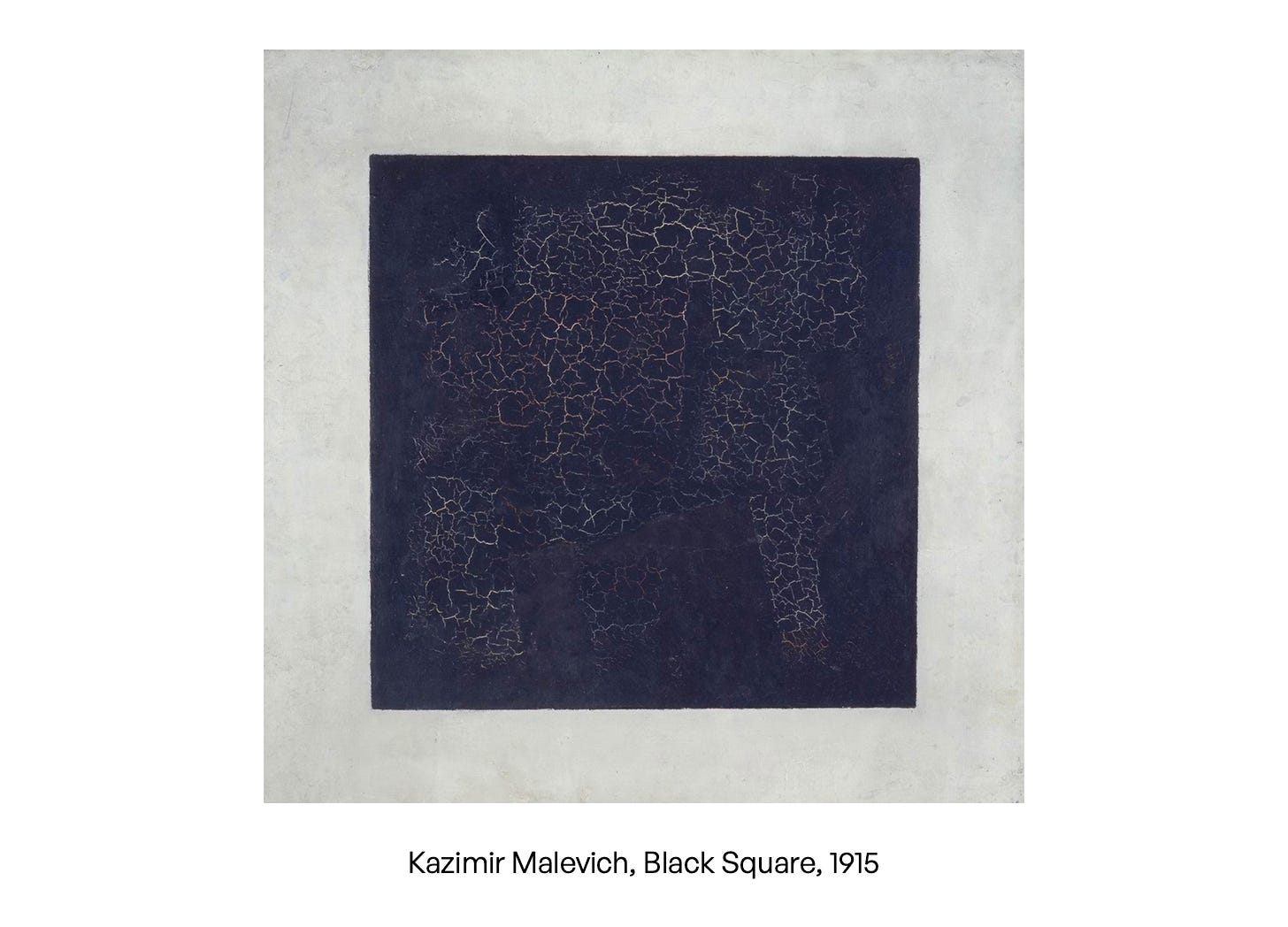
At the same time, in Russia, Kazimir Malevich took abstraction to its most extreme conclusion. His Black Square (1915) was one of the most audacious manifestos in art history. It was a black square on a white background. An end and a beginning. Malevich called his philosophy “Suprematism,” believing he had liberated art from the “dead weight of the real world” to express pure artistic feeling.
Utopia and Order: The Vision of De Stijl
While some sought spiritual chaos, others searched for universal order. In the Netherlands, a group of artists led by Piet Mondrian founded the De Stijl (The Style) movement. They believed that the trauma of World War I was caused by excessive individualism. Their solution was a universal visual language of pure harmony. In works like Composition with Red, Blue, and Yellow (1930), Mondrian used only the simplest elements: straight black lines and planes of primary colors. He wasn’t painting a table or a tree; he was trying to paint the universal rhythm of the cosmos.
The New World: Abstract Expressionism in America
After the devastation of World War II, the center of the art world shifted from Paris to New York. A new generation of artists, many of them immigrants, created a new kind of abstraction: raw, heroic, and deeply personal. Thus, Abstract Expressionism was born.
Its stars, like Jackson Pollock, Mark Rothko, and Willem de Kooning, became cultural heroes. They sought something direct and monumental. Pollock famously dripped and poured paint in a dynamic dance around the canvas, capturing pure energy. Rothko, in contrast, built silent, imposing canvases of soft-edged color rectangles, intending them as portals to profound emotion.
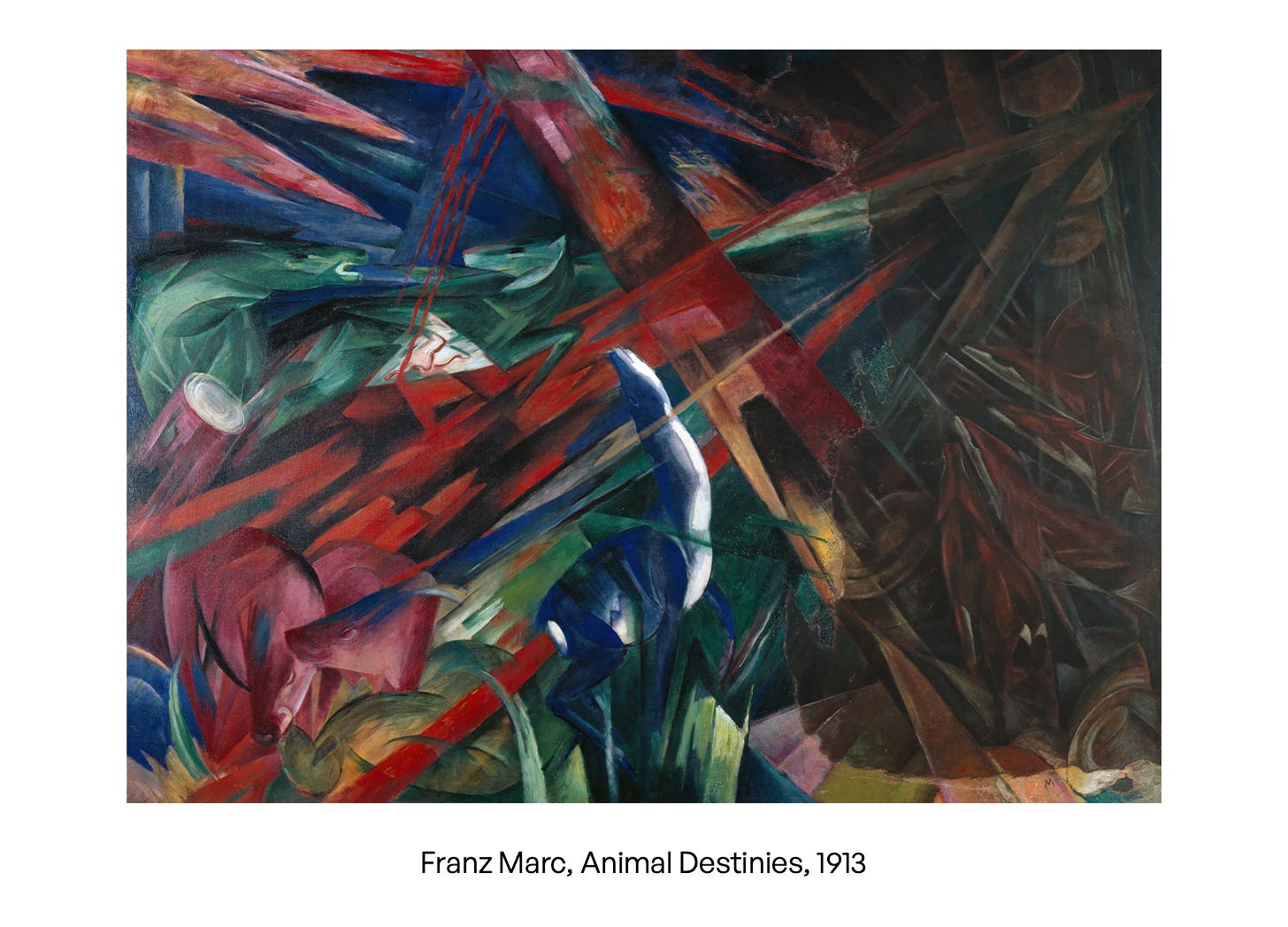
This focus on color and form as carriers of intense emotion had deep roots in European Expressionism. To understand this powerful connection, let’s look at a work by one of its most brilliant pioneers, Franz Marc. In his stunning 1913 painting, The Fate of the Animals, we see the same emotional charge. The canvas shatters into fragments. A blue deer raises its head in agony, yellow horses panic, and red tones suggest a world engulfed in fire. Marc isn’t painting a realistic forest; he is painting a state of apocalypse, a “cosmic panic.” He uses color not for description, but for pure feeling - blue for spirituality, yellow for femininity, red for violence. It is this very principle - that color and gesture alone can convey humanity’s deepest dramas - that was later taken to a heroic new scale by the Abstract Expressionists.
By abandoning the need to represent the world, abstract art didn’t reject reality. It simply found a new, deeper way to interact with it. It gave art a new job: to show us not what the world looks like, but what it feels like to be alive within it.